At the height of summer, when our garden produces lots of basil, we make batches of pesto to use immediately and to freeze. Basil pesto lasts a long time in the freezer without losing flavor. Though pesto is available in a jar at the supermarket, making it yourself means you can experiment with the ingredients and adjust them to your taste.
Pesto History
The basil puree known as pesto has been popular for centuries in Italy's Liguria region, where Genoa is, and in France's Provence, where it's called pistou. I add fresh or frozen pesto, not just to pasta, but also to vegetable soup, using the recipe for Soupe au Pistou from Mastering the Art of French Cooking by Julia Child, Simone Beck, and Louisette Bertholle.
According to food historian Harold McGee (On Food and Cooking), pesto was hardly known in the United States until the 1970s. I first tasted it at a friend's house in the 1970s. Shortly after that I clipped the recipe for "Blender Pesto" shown below from a newspaper. In the 1970s, when blenders were popular, food processors were a recent invention that cost a good deal more ($175 vs $35 for the most expensive blender). It was another two decades before I had a food processor and switched to making pesto with it.

The scribbles on the recipe show how I've cut down on the salt and the oil and increased the amount of nuts. If you have no health issues related to fat or salt, try the quantities in the original recipe which makes enough for a pound of pasta. We usually make four times as much so that we have plenty to freeze. That's the quantity in the photos below. The final, barely readable sentence tells you to omit the cheese if you freeze the pesto. The cheese then goes on last, as a topping just before eating.
Most of the time I add parsley, as in the recipe I clipped, but I didn't have any on hand. It's not noticeable by its absence. In the 1970s pine nuts weren't widely available in supermarkets so I often used walnuts instead. Almost any kind of nut can go into pesto with slight flavor differences in the final sauce.
Whether you're using freshly made pesto or defrosted frozen pesto, scoop out as much as you need to combine with the pasta. Since I use less oil than the recipe calls for, I add additional liquid--some of the water in which the pasta was cooked.
Mix the pesto with the pasta and then add any garnishes you'd like to make the dish more colorful.
What's your favorite sauce for pasta?
📚
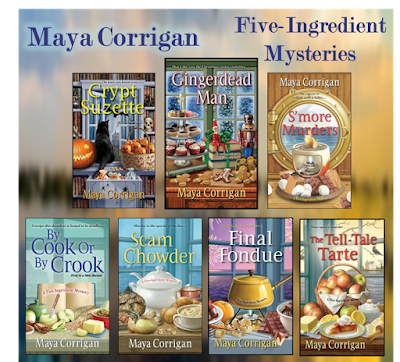
Maya Corrigan writes the Five-Ingredient Mysteries featuring café manger Val and her live-wire grandfather solving murders in a Chesapeake Bay town. Maya lives in a Virginia suburb of Washington, D.C. Before writing crime fiction, she taught American literature, writing, and detective fiction at Northern Virginia Community College and Georgetown University. When not reading and writing, she enjoys theater, travel, trivia, cooking, and crosswords.
Visit a mystery fan fest in the latest Five-Ingredient Mystery

Val and Granddad attend a mystery fan fest that features a bake-off between contestants playing the roles of cooks to fictional sleuths. As Nero Wolfe’s gourmet chef, Granddad competes against Sherlock Holmes's landlady Mrs. Hudson, played by Cynthia Sweet. Granddad blames her for ripping off the five-ingredient theme of his Codger Cook newspaper column to use in her own recipe column and cookbook. When she’s found dead in her hotel room with a whistling teakettle next to her, he and Val sort through the festival-goers to find the one with the biggest beef against Ms. Not-So-Sweet.
📚