Showing posts with label steamed pudding. Show all posts

Saturday, March 12, 2022

Golden Syrup Steamed Pudding #recipe from @MysteryMacRae


The last recipe I shared was for homemade Golden Syrup, and I promised my next post would be this recipe for Golden Syrup Steamed Pudding. Steamed pudding is a classic British dessert made in a thick crockery dish called a pudding basin or a pudding bowl. I have a lovely blue and white striped one from Cornwall. 

The pudding turned out exactly as I’d hoped – a warming, comforting, not overly sweet dessert for a cold day. I'm not thrilled about using parchment paper and aluminum foil, only to toss them afterwards, but don't know of a good alternative. If you do, please let me know in the comments. We all enjoyed the pudding immensely. Here’s how you can make one, too.

Ingredients

110g (1/2 cup) golden syrup – divided

175g (12 Tablespoons – 1 1/2 sticks) unsalted butter, softened

125g (5/8 cup) brown sugar

3 large eggs, lightly beaten

175g (1 1/3 cup) self-rising flour

1/4 cup milk

More golden syrup to serve (we didn’t add more, though next time I might make pouring custard to go with the pudding).

You'll also need a 2 pint pudding basin, parchment paper; aluminum foil; heavy cotton string; a large deep soup kettle with lid; a heatproof saucer, trivet, or steamer basket for the pudding basin to sit on inside the kettle 

Directions


Butter a 2-pint pudding basin then pour 1/4 cup golden syrup in the bottom. Set aside.

Beat the remaining 1/4 cup golden syrup, the butter, and brown sugar until light and fluffy. Stir in half of the eggs, then stir in half the flour. Stir in the rest of the eggs and flour along with the milk.

Spoon the mixture into the pudding basin (it shouldn’t come up above 1-inch from the top). Smooth the surface.


Cut a circle of parchment twice the diameter of the top of the pudding basin. Make a 1-inch pleat down the middle of the circle. Repeat with the aluminum foil. The pleats allow the pudding to rise as it cooks.

not exactly round, but it worked

Cover the pudding basin with the pleated parchment circle with the pleat over the center of the basin. Cover the parchment with the pleated foil.

Tie the pudding tightly around the rim with the string. Make a lifting handle by crossing more string across the top of the basin. This will help you lift the pudding out of the kettle after its cooked. Trim excess paper and foil, leaving a 1-inch border, and turn the edges in on themselves to seal.


Put a heatproof saucer, small trivet, or steamer basket in the large, deep kettle. Put the pudding basin on top. Add enough just-boiled water to the pan to come halfway up the sides of the basin. Cover the pan with a tight-fitting lid (I added a layer of foil across the top of my kettle because the lid has a steam hole in it).

Cook, over lowest heat, allowing the pudding to steam in gently simmering water for 1 3/4  hours. Make sure the kettle doesn’t boil dry – add more just-boiled water if necessary.

The pudding is done when a fine skewer inserted into the middle of the pudding (through the foil and parchment) comes out clean. Turn off the heat. Carefully lift the basin out of the kettle and let stand for 5 minutes.


Cut the string from the basin. Discard the foil and parchment. Run a flat-bladed knife around the edge of the pudding to loosen the sides. Carefully invert onto a plate and remove the basin. Cut into wedges and serve with extra golden syrup, pouring custard, or vanilla ice cream. 


In bookstores and libraries now!


About Argyles and Arsenic – book 5 in the Highland Bookshop Mysteries:

After 93 well-lived years, Violet MacAskill is ready to simplify her life. Her eccentric solution? She’ll throw a decanting and decluttering party at her family home—a Scottish Baronial manor near the seaside town of Inversgail, Scotland. Violet sets aside everything she wants or needs, then she invites her many friends in to sip sherry and help themselves to whatever they want from all that’s left.

But a murder during Violet’s party leads to a poisonous game of cat and mouse – with the women of Yon Bonnie Books playing to win.

Available in hardback and e-book from your locally owned independent bookstore, Barnes & Noble, and Amazon. Or ask your public library to consider ordering it.


The Boston Globe says Molly MacRae writes “murder with a dose of drollery.” She’s the author of the award-winning, national bestselling Haunted Yarn Shop Mysteries and the Highland Bookshop Mysteries. As Margaret Welch, she writes books for Annie’s Fiction. Her short stories have appeared in Alfred Hitchcock Mystery Magazine since 1990 and she’s a winner of the Sherwood Anderson Award for Short Fiction. Visit Molly on Facebook and Pinterest and connect with her on Twitter  or Instagram.


Saturday, February 26, 2022

Can You Make Golden Syrup? Yes! #recipe from @MysteryMacRae

Lyle’s Golden Syrup is an elusive ingredient here in the Midwest. It’s available online, but where’s the fun in that? Golden syrup—say it slowly and it sounds like a really top-shelf ingredient, one without equal. I, for one, always say ‘golden syrup’ with complete reverence and taught my children to do the same.

I know golden syrup from my time living in Scotland. According to British bakers, there’s no good substitute for it. Sure, you can approximate it by mixing light corn syrup with a tad of molasses or treacle, but let’s be real (and possibly snooty?) and say that substitutes just are not the same, because whatever you use will impart its own flavor—and that flavor is not golden syrup.

Or we can be practical, versatile cooks and say that honey or maple syrup will be a perfectly lovely variation for any recipe.

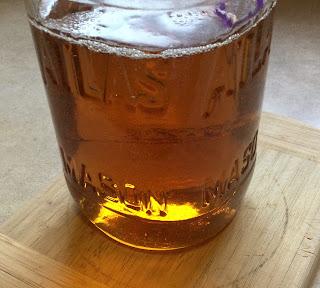
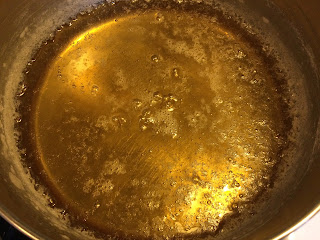
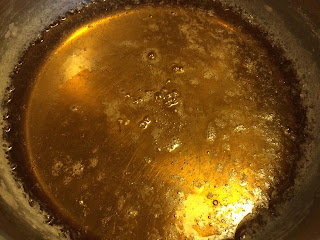
Still, I’ve pined for golden syrup for many years now, and finally discovered that you can make it yourself. That sort of removes the mystique, so I won’t talk about mine with any sense of reverence, but isn’t the color gorgeous?  

You can see a tin of Lyle’s Golden Syrup in Sheila Connolly’s recipe for Treacle Tart. She also used golden syrup or a substitute in Lemon Treacle Slice and Chocolate Biscuit Cake.

My next post, on Saturday March 12th, will use my homemade concoction in Golden Syrup Steamed Sponge Pudding (which I have to make before then—so I’ll do it tomorrow when it’s blustery outside. MMmmmm, steamed pudding.)


Golden Syrup


Ingredients

1 ¼ cups water 

4 cups sugar

2 tablespoons lemon juice

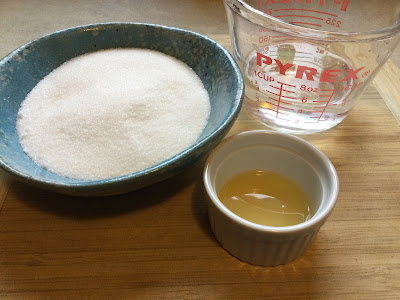
(note - the pictured quantities are not accurate measures) 

Directions

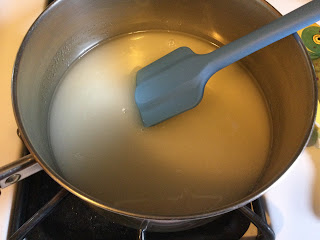
Put sugar and water into a saucepan. Stir to combine.


Bring to a boil, stirring regularly to prevent burning until the sugar is dissolved. Stir gently to prevent the sugar water from splashing up the sides of pan and crystalizing there. (I failed at that. Next time I’ll try a gentle whisk.)

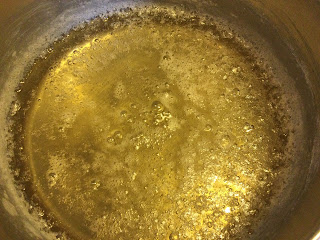
When the mixture is boiling, gently stir in the lemon juice. Reduce the heat to very low so that it simmers gently. Continue gently simmering, uncovered and without stirring, for 40-60 minutes, until the syrup is a beautiful, rich, golden color.


Turn off the heat, let your liquid gold sit for a few minutes, then pour the hot syrup into a glass jar and let it cool completely before closing the jar with a tight sealing lid.

You can store the syrup at room temperature for several months, although mine is in the refrigerator.

Makes about 3 cups of syrup.

Tips: If your syrup is too stiff, reheat it and add a bit of water. If it’s too thin, reheat it and caramelize the sugar a bit longer.

Something poisonous is coming March 1, 2022!


About Argyles and Arsenic – book 5 in the Highland Bookshop Mysteries:

After 93 well-lived years, Violet MacAskill is ready to simplify her life. Her eccentric solution? She’ll throw a decanting and decluttering party at her family home—a Scottish Baronial manor near the seaside town of Inversgail, Scotland. Violet sets aside everything she wants or needs, then she invites her many friends in to sip sherry and help themselves to whatever they want from all that’s left.

But a murder during Violet’s party leads to a poisonous game of cat and mouse – with the women of Yon Bonnie Books playing to win.

Available for pre-order in hardback and e-book from your locally owned independent bookstore, Barnes & Noble, and Amazon. Or ask your public library to consider ordering it.


The Boston Globe says Molly MacRae writes “murder with a dose of drollery.” She’s the author of the award-winning, national bestselling Haunted Yarn Shop Mysteries and the Highland Bookshop Mysteries. As Margaret Welch, she writes books for Annie’s Fiction. Her short stories have appeared in Alfred Hitchcock Mystery Magazine since 1990 and she’s a winner of the Sherwood Anderson Award for Short Fiction. Visit Molly on Facebook and Pinterest and connect with her on Twitter  or Instagram.


Friday, December 22, 2017

Christmas Pudding

Most of us here at Mystery Lovers' Kitchen turn to our old favorite recipes at the time of year (or variations upon them), and I’m happy to add mine.

At my house when I was young, the Christmas menu was as set in stone as the Thanksgiving menu: standing rib roast, with potatoes cooked in the drippings in the pan; something green like peas; creamed onions for one die-hard member of the family (nobody else would eat the things); and for dessert, chocolate steamed pudding.

Pudding is kind of a deceptive term, that we usually associate with goopy milky glop, and is no doubt a tribute to the English origins of the dish. The English often use the term pudding for any dessert. But this is officially a pudding. The virtue of this recipe for holiday meals is that you mix it up, put it in a pudding dish or steamer mold, stick it in simmering water, and ignore it for a couple of hours while you deal with the rest of dinner.

I was once again reminded of this dish when I picked up a cookbook in a secondhand store in Ireland: Winter Puddings, a collection of sweet/dessert recipes adapted from the Cordon Bleu Cookery School and published in England in 1971. Perfect for the season, right? And of course it included a number of recipes for steamed puddings of various flavors.

In the past I’ve made the chocolate version, as well as a cranberry variation, but what caught my eye this time was a Steamed Ginger Pudding. Of course the details of the recipe were given in British units with some ingredients I seldom use (suet?? is that like, uh, lard? or what we feed the birds?), but I soldiered on. After all, I possess more than one pudding mold, and they must earn their keep.


Cordon Bleu Steamed Ginger Pudding

Ingredients:


10 oz flour (this turned out to be two cups)

(Note: if you watch the Great British Baking Show, you know that ingredients there are often measured by weight, and in their honor I have a kitchen scale and now use it regularly)

1 rounded tsp ground ginger (really? is that all? I added a tablespoon—I like ginger)

a “good pinch” of mixed spice (oh, heck, I don’t know what that is—how about some cinnamon and a dash of ground clove?)

1 tsp baking soda

a pinch of salt

5 oz shredded suet (seriously? Beef fat? I substituted butter, at room temperature)

1 large egg, beaten

6 fluid oz (6 Tblsp) golden syrup or treacle (alas, both are hard to find locally. I could have brought both back from Ireland, but together the cans weighed about five pounds, and my suitcase is always pushing the limits. Plus they’re liquid, and I’m not sure how the government feels about that these days.) I used dark molasses.

about 6 fluid oz milk (I’ll assume whole milk), at room temperature

Instructions:

Sift the flour, spices and baking soda into a bowl.


Add the butter, then mix. Pour in the beaten egg and molasses and mix.


Pour the milk into the bowl. Stir well: the mixture should drop easily from the spoon (not too thick).


Find yourself a pudding basin (or use a metal bowl that will stand up on its own) and generously grease it.

I have two. The one on the right was the one I
grew up with, so that's what I used.

Pour the batter into the basin, level it off, and cover the top of the basin (or bowl) with a piece of greased waxed or parchment paper held on by string. (Or clamp the lid on over the paper, if you have that kind.)


Stand the basin in a large pan of boiling water. The water should reach somewhere between half-way and two-thirds up the side of the container (it shouldn’t be floating!). 

Cover the large pan and steam the pudding for about 2-1/2 to 3 hours (yes, really). Do not let it boil, merely simmer. If the water is boiling off and the level is sinking, replace it with more boiling water as needed.

See how much it rose?
When you open the basin/bowl, if all has gone well the pudding will have risen to the top. Let it cool for a bit, to make it easier to handle, then invert the mold onto a plate, and it should slide out easily. Serve it warm, sliced into wedges, with a sauce if you like. If you use Redi-Whip, I won’t tell.

And it even came out of the mold!


If you’re feeling adventurous, the cookbook also contains recipes for Rich Fig Pudding, Chocolate Pudding, Spotted Dick (don’t ask), Valencia Pudding, and Six-Cup Pudding. 

May your holidays be merry, and may you get whatever you wish for!

The three wise men, er, meerkats

www.sheilaconnolly.com


Friday, December 30, 2011

Steamed Pudding

by Sheila Connolly

My family didn't have a lot of food traditions.  I've already mentioned the omnipresent roast beef at any gathering of more than five people at our home--never a ham!  For years we catered to one crochety older relative who loved creamed onions and mashed turnips, but those disappeared from our lives when he did.  My New York grandmother kept us supplied with wonderful cakes and cookies, so we didn't bake much for the holidays.  The one constant exception was steamed pudding.

This really is a throwback recipe, harking to old English custom.  If you read descriptions from the day, it sounds rather disgusting.  I checked my Williamsburg Art of Cookery (1742), where the recommendation for plum pudding was to combine pounds of raisins, orange and lemon peel, walnuts, suet, breadcrumbs, salt, sugar and flour--plus one teaspoon cinnamon and one-quarter teaspon each of nutmeg, mace, ginger and cloves (ten pounds of ingredients and a grand total of two teaspoons of spices?  Talk about blah!).  Then pour it into molds, "tie down with a clean scalded cloth and boil gently for ten hours."  Yes, ten hours.

Another options was to put your pudding into a floured bag and boil for a few hours--I have to hope that the flour created a crust, or the thing would be one soggy mess.  Or maybe that's what they were aiming for.

The "modern" version is not limited to the fruit and nuts variety.  When I say modern, I'm referring to the Boston Cooking School Cookbook (aka "Fanny Farmer"), the 1947 edition--my family's Bible for basic cooking.  For as long as I can remember, we had Steamed Chocolate Pudding for Christmas dinner.  As you can see, it shows penciled edits by my mother, my sister and me, added over the years.


Steamed Chocolate Pudding

3 Tblsp butter
2/3 cup sugar
1 egg, well beaten
1 cup milk
2 1/4 cups flour (we preferred cake flour because it gives a finer texture)
4 1/2 tsp baking powder
3 squares unsweetened chocolate
1/4 tsp salt

Cream the butter, then add sugar gradually, then the egg.  Sift the flour with the baking pwder and salt, and add alternately with the milk to the butter-sugar mixture.

Melt the chocolate (Fannie et al. did this over boiling water, but they hadn't invented microwave ovens in her day) and add the to mixture.

Turn into a buttered mold.  Steam for 1 3/4 hours.  Serve with whipped cream.


Sounds simple, doesn't it?  The challenges are (1) to find a steamed pudding mold (I have three, the rather plain family heirloom, and a couple of fancier ones I bought for myself) and (2) steaming the thing.  The instructions say, fill your mold no more than 2/3 full (this will expand!), cover it (place a layer of buttered wax paper beneath the cover so it won't stick), place the mold on a trivet in a kettle containing enough boiling water to come halfway up the mold.  Keep the level steady, adding more boiling water as needed.


It had never occurred to me that the effect here is cooking it at precisely boiling temperature, 212 degrees F.  Baking it in a low oven would not create the same affect.  On the plus side, you can do this on the stovetop, if your oven is occupies with a turkey/goose/roast.  On the minus side, you can't tell how it's doing, all sealed up in there, and you have to take the timing on faith.

A couple of comments, gleaned over the many years:

--The blinking thing floats!  You really have to find a way to weight it down so that the lower part stays both level and consistently submerged, or you'll end up with an unevenly cooked cake that tilts to one side.

--Butter everything well, or some part will stick somewhere.  It'll still taste good, but it won't be a pretty presentation for guests.

--If you use unsweetened chocolate, the pudding will not be very sweet (you can compensate by sweetening the whipped cream).  You might prefer semi-sweet chocolate.

Ah, but when it works, it's a delightful smooth and light cake that melts in your mouth.  It's worth the trouble!


One last note:  the 1947 cookbook offers pages of alternatives, involving cranberries, blueberries, carrots (!), figs, mixed fruit, ginger and orange cream, plus, of course the traditional plum and suet puddings. 

Have a happy New Year!