Showing posts with label Museum Mysteries. Show all posts

Friday, June 28, 2019

COD WITH CHEESE SAUCE


The cod loins were back at the market this week. My fish lady told me that the loin in the biggest part of a cod filet, and the price reflects that but I bought one anyway. I already had a recipe in mind. This one comes from an Irish cookbook, but it’s very flexible—you can make it with or without mushrooms, or substitute whatever other vegetable you feel like. As for cheese, pick your favorite semi-hard cheese (which is gratable). If the sauce seems too thick, just add a little more milk. And taste as you go—I found that the lemon juice, even in small amounts, made a definite difference in flavor.

Cod with Cheese Sauce

Ingredients:

3/8 cup whole milk

One slice of onion
3 peppercorns
1 bay leaf
3 parsley stalks
1 oz. butter
1/2 pound cod fillet
1 oz. mushrooms (whatever type you prefer, chopped or sliced)
1 scant oz. flour
1 Tblsp lemon juice
Salt and pepper
2 oz. Cheddar cheese, grated

Instructions:


Put the milk in a small saucepan along with the onion slice, peppercorns, bay leaf and parsley stalks. Bring to a boil, then remove from the heat and let “infuse.”


In a different saucepan melt the butter, then brush a little of it on an ovenproof pie dish. Cut the cod into strips, then lay the strips in the pie dish and scatter the mushrooms on top.


Add the flour to the remaining butter in the saucepan and whisk to blend. Strain the milk and stir it into the flour-butter mixture until it’s smooth. Bring to a boil and cook until it thickens. Add the salt and pepper, a dash of lemon juice, then 2/3 of the cheese and stir until smooth. When the cheese is melted, pour the sauce over the fish and mushrooms. Sprinkle with the rest of the cheese.


Preheat the oven to 350 degrees. Cook for 20-25 minutes, or until the top is golden brown.


Note: you could also make this in individual ramekins (about 1/2 pint each for single servings).


At last! The newest Museum Mystery is coming out today!
 The New York Times bestselling author of Dead End Street returns with Nell Pratt discovering one of Philadelphia’s darker buried secrets . . .


When a summer intern at the Preservation Society discovers an aged document hidden in the binding of an antique book, Society president Nell Pratt is intrigued by the possibilities: is it a valuable historic document or just a useless scrap of paper? When analysis reveals that it’s a hand-drawn map of one of Philadelphia’s oldest neighborhoods, Nell learns that the area is being excavated for a new real estate development and may hold long-buried secrets from the city’s historic heyday.
Determined to get to the bottom of the map’s origin and what it might tell her about the mysterious plot of land, Nell will have to contend with a construction company owner who disappears, a former Society board member who’s harbored a dark secret her entire life, and a remarkable discovery that may have the dead turning over in their graves . . .
You'll never look at Philadelphia in quite the same way
Available in print and e-book formats.

www.sheilaconnolly.com

Friday, May 31, 2019

Snippy Doodle from Emma Jane's Souvenir Cookbook


I may have mentioned I’m cleaning out and sorting all the stuff in my house to sell, and this is an odd item that emerged from my grandmother’s files.


 Why odd? Well, for a start, my grandmother never cooked, so why a cookbook? Because Emma Jane’s Souvenir Cook Book (1937) includes on the title page my grandmother’s handwritten explanation:


From Mrs. B. E. Moncure, Williamsburg, Virginia

Ned [her husband, the grandfather who I never knew] took his meals at Mrs. Moncure’s house while he attended William and Mary.

Emma Jane was Mrs. Moncure’s cook at that time, and Ned knew her well.


 It is, to be polite, a very odd little book. Much of the text and the recipes are attributed to Emma Jane Jackson Beauregard Jefferson Davis Lincoln Christian, the aforesaid cook, born during the Civil War and given her name(s) by three Union soldiers who just happened to be passing through Virginia when she was born. She was in her seventies when this book appeared.

The recipes in general are heavy on the flour/butter/sugar/eggs, and most are short—from four to six ingredients—and simple. But I will admit I was intrigued (mostly by the name) by one particular dessert recipe, which is typical of most in the booklet.

Snippy Doodle

Ingredients:


1 cup sugar
1 pound butter [yes, really]
1 egg
½ tsp vanilla
1 cup flour
½ cup milk
1 level tsp baking powder

Instructions:

Cream butter and sugar. Add vanilla, egg, milk, flour and baking powder. [Note: nothing is sifted together. And I cheated and used a stand mixer rather than beat the batter by hand.]


Put in a shallow square biscuit pan (8” x 8”), sprinkle with brown sugar [and] cinnamon [and] nuts.


Bake slowly in a moderate oven.


And that is the sum and total of the instructions.

I decided a moderate oven would be about 300 degrees, and kept an eye on the dish while it baked. It took about 40 minutes to firm up and for the crust to brown.


As you might guess, with a pound of butter in it, it’s pretty gooey. I would recommend chilling it for a while before trying to cut it into pieces. But if you read through the recipes throughout the book, you can picture a bunch of youthful male students enjoying the wealth of sweet dishes in a boarding-house atmosphere.

What we now know as the “living history museum” of Williamsburg did not exist as such when my grandfather was at school there: the restoration of the 18th century Virginia capital began in 1926, but my grandfather was born in 1901 and would have missed it. Still, he and my grandmother visited after the Rockefeller family had provided the funds to transform the place.

Stay tuned! Digging Up History should be released by the end of June--as soon as Beyond the Page finalizes the cover (we're working on it!).


Friday, May 24, 2019

Maple Bread Pudding


I like my local supermarket, Hannaford’s. They are the third chain to occupy that space at the nearest shopping center, but it’s lasted the longest. They do keep stocking new foods, and there are plenty of healthy choices, especially among the vegetables, and I’m buddies with the fish seller.

But I hadn’t realized until recently that they produce a magazine called Fresh, which is free if you buy more than $25 of food (which of course I do regularly), and some of the recipes are interesting and the pictures are good. I finally read a copy, and decided to experiment with one of the recipes from a recent issue—something I’d never made, and a nice twist on an on old recipe.

Maple Bread Pudding

Ingredients:


8 ounces fresh or left-over bread (about 7 cups)
1-1/2 cups whole milk
1 cup half-and-half or light cream
2/3 cup maple syrup (I used a dark syrup, with intense maple flavor)
2 large eggs plus 3 egg yolks
1 Tblsp vanilla
1/2 tsp salt
2 Tblsp unsalted butter, cut into small pieces

You can add whatever spices you like (cinnamon, nutmeg)

Instructions:

Preheat the oven to 350 degrees. Grease an 8-inch baking dish (I used a larger round Pyrex one, and it worked fine).


After toasting
Tear up your bread into pieces about 1-1/2 inches in size. Spread the bread on the baking sheet and toast in the oven until the pieces a crisp (about 20 minutes). Let cool to room temperature.

In a large bowl, whisk the milk, half-and-half or cream, maple syrup, eggs and extra yolks, vanilla, salt and optional spices. Add the cooled bread and stir to cover all the pieces. Let the mixture sit until the bread absorbs all the liquid (25-30 minutes), stirring occasionally.


Spoon the mixture into the baking dish and press into an even layer (if there’s any liquid left over, add that). Sprinkle the butter pieces over the top. Bake for about 50 minutes, until the top is golden brown.

Ready to bake
Baked!
Remove from the oven and let the pudding cool on a rack for at least 30 minutes before serving (so it will firm up just a bit).

You could serve this with whipped cream if you like. I also thought about sprinkling the top with demerara sugar before baking, to add some crunch.

It’s not too sweet, and the maple flavor comes through nicely.

Hey! The long-awaited next Museum Mystery finally has a name: Digging Up the Past! Now, as soon as my publisher and I put together a cover and a jacket blurb it will go to press, courtesy of Beyond the Page. I guarantee that you will learn things about Philadelphia that you never suspected.

Friday, April 12, 2019

Crunchy Mustard Salmon

A few weeks ago the Boston Globe ran a great full-page article entitled “Navigating the Confusing World of Salmon” and recommended which salmon you should buy to cook. In case you haven’t been looking lately, there is farmed salmon from Norway and Iceland, wild Alaskan Salmon, Faroe Island salmon (mostly in restaurants rather than markets), and farmed North American salmon (from Canada). And don’t forget salmon from British Columbia and Scotland.

But there is one glaring omission: Irish salmon. The Irish seafood market is booming, growing from year to year, and salmon leads the pack, er, school. Much of the fish goes to the European Union, including the U.K. (unless Brexit messes things up).


Of course some of it stays in Ireland, and I know a lovely small company that makes delicious smoked salmon in Union Hall on Glandore Harbour in West Cork, and they sell it at the Saturday farmers market in Skibbereen.

I like to cook salmon and I like to eat it. It’s a sturdy fish and it’s hard to overcook. And it looks pretty on a plate. So of course I have assorted salmon recipes (many of which I’ve posted here on Mystery Lovers’ Kitchen) and I’m always looking for more. Here’s one that’s new to me, and it’s Irish.

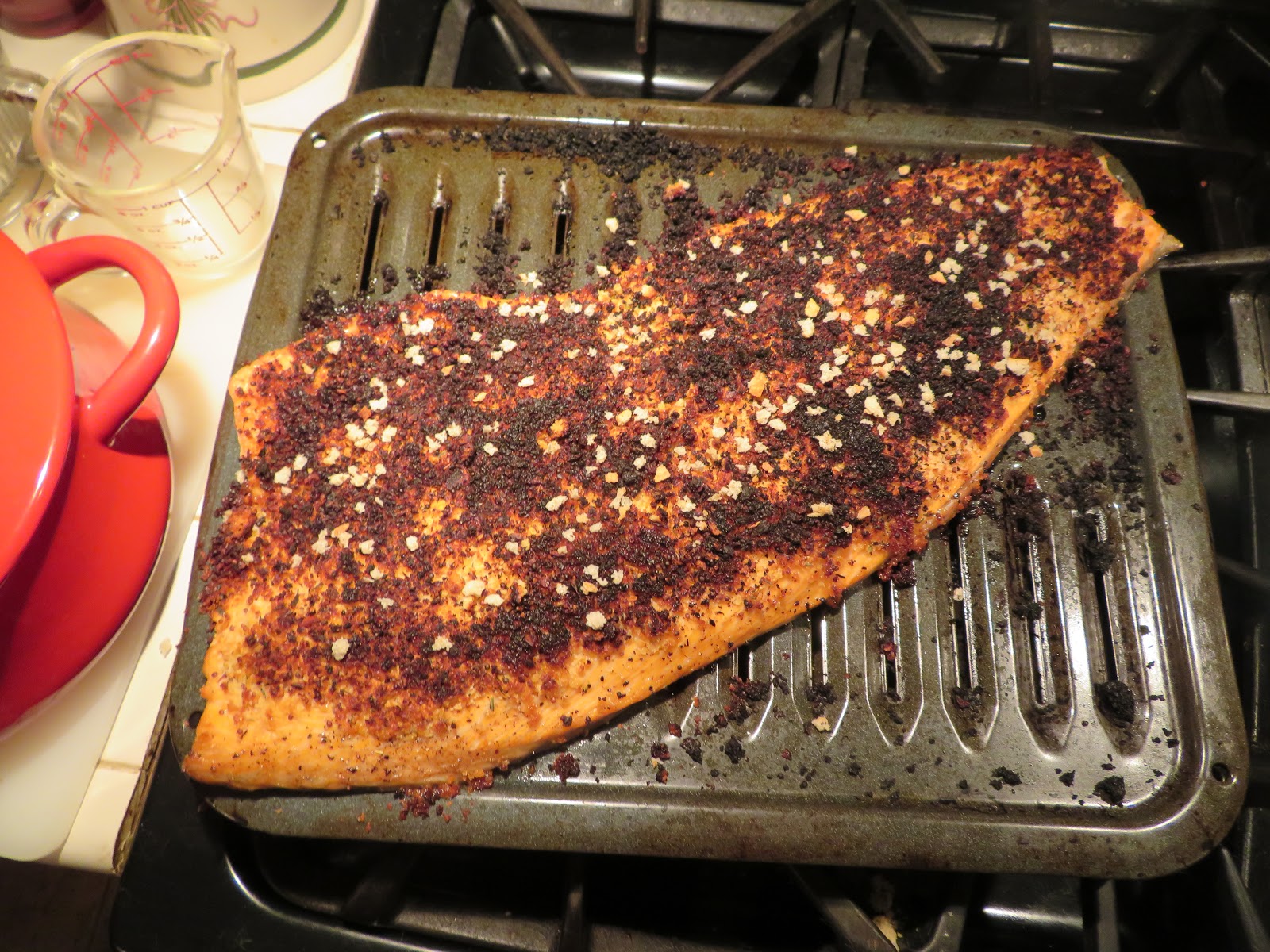
Crunchy Mustard Salmon

Ingredients:


2 salmon fillets (about 6 oz. each)
(actually I fell in love with a single slab of salmon so
bought that instead)
Freshly ground pepper
Sea salt
1 Tblsp unsalted butter, softened
1 Tblsp whole-grain mustard
1 Tblsp Dijon mustard
1 tsp fresh thyme (dried if you must)
2 cups dried bread crumbs or panko for coating

Instructions:

Preheat the broiler to high and set the rack to 6-12” below the flames (not too close or the coating will burn before the fish cooks—keep an eye on it)
If you’re using breadcrumbs you can make your own in a food processor, but don’t make it too fine.

Season the fish fillets with salt and pepper.


the crumb mixture
In a bowl, mix the crumbs or panko, the butter, the two mustards and the thyme. With your fingers or a fork, mix together roughly until the mixture sticks together. Season with salt and pepper.

Spread some butter on the bottom (skin-side) of each salmon fillet, place butter-side down in a preheated oven-proof skillet, and sear over medium-high heat for about 2 minutes. Don’t move it around—you want a nice crispy crust.


Press the rest of the crumb mixture into the top side of the salmon (still in the skillet), and slide under the broiler. Broil just until the top crumbs are crunchy and browned, about 4-5 minutes, and serve immediately. (A green vegetable like asparagus makes a pretty pairing.)


The next Museum Mystery is still hovering in the wings, waiting for its title. It should be available next month. I hope.

In an odd twist of fate, yesterday I received an email from the "real" president of the venerable Historical Society of Pennsylvania (the model for the Society in the series) where I worked for several years, announcing that they were cutting staff by 30% for financial reasons. They have an incredible collection of historic resources, but there's never enough money. 

I wonder if I can send Nell Pratt in to rescue the place?


Friday, March 8, 2019

Rainbow Carrot Soup


This seems to be soup week at MLK! I too have a long-treasured recipe for carrot soup, originally called Potage de Crecy. It originated in the lovely Time-Life series of cookbooks (they came in pairs: one book for pretty pictures, one smaller spiral-bound book with the recipes). They date from the 1960s, and my mother bought a few, which I inherited.

The basic soup is delicious, and I’ve made it many times. But this time I went a little crazy. You see, I had a lot of carrots in the fridge, but the majority of them were yellow or ivory, not orange. Oh, there were a few orange ones, and there were also several dark maroon ones (which have a yellow core). I said to myself, “What the heck, it’s almost spring, and Easter, and all that stuff, and it’s snowing out there so I’m not going to the market to bring home one bag of carrots.” So I improvised. Call it Rainbow Carrot Soup or Confetti Soup – it will taste good either way.


Rainbow Carrot Soup

Ingredients (to serve 4-6):


2 Tblsp butter
3/4 cup finely chopped onion
3 cups finely chopped carrots
[Note: I’m not sure food processors had been invented when this recipe was written. Now it’s much easier to chop things. Just stop short of making mush out of them—that’s for later.]
1 quart chicken stock
2 tsp tomato paste
2 Tblsp plain white rice (uncooked)
Salt
White pepper
1/2 cup heavy cream
1 Tblsp soft butter

Instructions:

In a heavy 3 to 4 quart saucepan, melt the butter over medium heat. Add the onions and cook, stirring occasionally, for about 5 minutes, or until the onions are soft but not browned.


Add the carrots, chicken stock, tomato paste and rice and simmer gently, uncovered, for 30 minutes.


Puree the soup (a food mill if you’ve got one, or a food processor or blender) and pour the soup into a clean saucepan. Taste for seasoning and add salt and white pepper to taste. Stir in the cream.


Now comes the fun part. Take whatever color weird carrots you’ve got and coarsely grate them. (If you’re using a food processor and have the grating disk, use that.) Make 1-2 cups of grated carrots, or grate until you run out of the odd-colored carrots.

Add the to the pureed soup (before you add the seasoning and the cream). Simmer for a while (check the carrot shreds—you want them cooked but not mushy. Warning: if everything is mushy, you may end up with gray soup!) When the carrot shreds are soft but still have a bit of crunch, finish the with the seasoning and cream and heat through. Add that last pat of butter and stir it in.


I chose to serve this with cornbread, which had some texture and is just a bit sweet, a nice complement to the carrots.


Enjoy!

Help! The coming books list is a bit chaotic at the moment! The next Museum Mystery still doesn't have a name but it should appear next month. I'm proofing the next Victorian Village Mystery, Killer in the Carriage House, as we speak, and that's due out in June. The next County Cork Mystery is finished in draft and is undergoing edits, but it's scheduled to appear next January. And there should be another Orchard Mystery in the fall, if I can find some breathing room!


Friday, March 1, 2019

Quick-Roasted Chicken


Last week I promised you something from Sam Sifton, the food editor for The New York Times and a good model for MLKers. As a reviewer, he gathers a lot of recipes from chefs and restauranteurs. What’s more, he includes at least one no-recipe recipe each week in his Times food newsletter. A week ago he published over forty of them and they appeared as a full-size standalone insert in the newspaper. Of course I saved it, and I may be making these for a long time. What I particularly admire is that he encourages a cook not to worry about measurements and finicky details—just make the dish. And use plenty of herbs and spices.

One note: he uses chicken thighs in most of his chicken recipes. I understand why: they cook well and remain moist and they’re a convenient single-serving size. But I’ve never been a fan of chicken thighs, or even chicken legs (not since I was about eight and my mother let me pick up the leg at dinner and gnaw on it). So I have substituted chicken breasts, which I (and my cats) prefer. Just don’t overcook them.


Sam Sifton’s Quick-Roasted Chicken

Ingredients:


Fresh chicken breasts (or thighs, if you must)
Mayonnaise
Dijon mustard
A lot of chopped fresh tarragon
Salt and pepper
Bread crumbs (I made my own)

(You’ll notice there are no amounts given. Just mix up enough of the coating to cover however much chicken you’re making.)

Instructions:

Preheat the oven to 400 degrees (yes, hot).


Mix together a bunch of mayonnaise, some Dijon mustard, and lots of tarragon in a roomy bowl.


Season the chicken pieces with salt and pepper, then add them to the bowl with the mayonnaise mixture and toss them to coat them evenly.


Grease a sheet (flat) pan and put the chicken pieces on the pan. Cover each piece with a healthy handful of bread crumbs, then press the crumbs so they stick to the chicken.

Bake in the hot oven for about half an hour, then test for doneness. If they’re not quite done, cook for another 5-10 minutes. The chicken pieces should be golden brown with a crisp bread-crumb crust.


Serve with whatever you like—rice, potatoes, salad or other veggies.


Doesn’t get much easier than that, does it? Thank you, Sam Sifton.

Shameless self-promotion: The book queue is lining up fast. Next in line is a new Museum Mystery, which will have a title (and a cover!) very soon. It should appear in April, from Beyond the Page Publishing.

In case you're wondering, that's the "real"
Society in Philadelphia, where I worked for
several years.
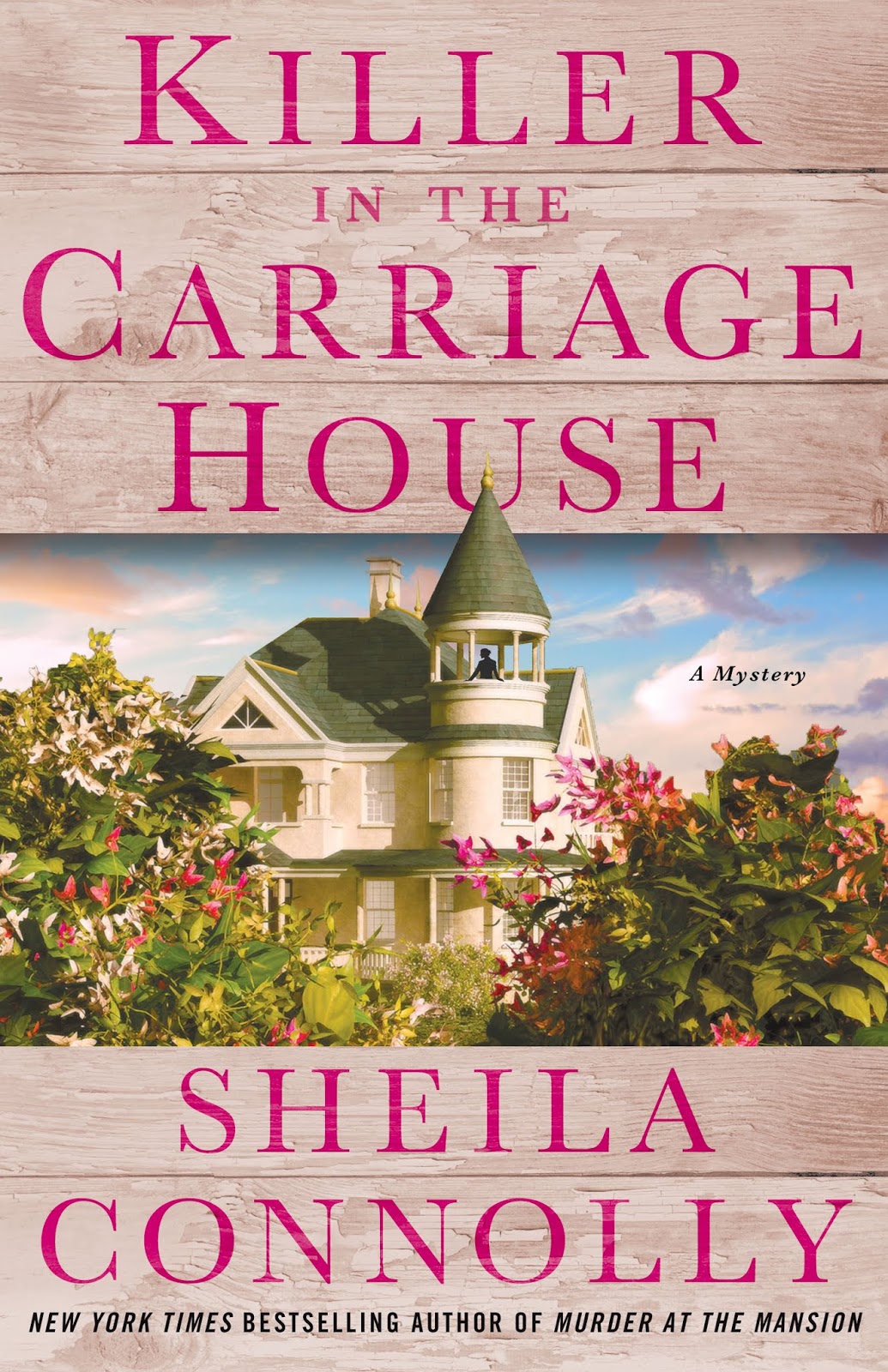
And then there will be Killer in the Carriage House, the second in the Victorian Village Mysteries in July!

Kate Hamilton is trying to save her struggling home town of Asheboro, Maryland, but there's no money available and nothing there to attract tourists. But Kate is determined to find a way--as soon as she solves the second murder since she arrived.