Showing posts with label scallops. Show all posts

Friday, August 23, 2019

Ruth Reichl's Pasta and Scallops


This is a simple tasty pasta dish with fresh scallops. I started out looking for an apple recipe of some sort, and this popped up in Ruth Reichl’s book Comfort Me with Apples, but I wanted to save the apple recipe for my next post, since apples mean the harvest season is beginning (and my early apples in the front yard are ripening), but the scallop recipe was so easy (even with no apples!) that I decided to give it a try. It’s not plagiarized, I promise! Even Ruth acknowledges that the recipe passed through several hands before she got to it.


Pasta and Scallops

Ingredients:

1 cup fish stock
1 cup heavy cream
½ pound scallops (bay or sea—your choice)
Salt and pepper
½ pound fresh linguine
1 Tblsp freshly squeezed lemon juice
Fresh herbs to garnish, if you want


Instructions:

Note: You should follow the steps in the order given. (1) make the sauce—it takes a little time to cook, but it will hold its heat while you prepare the other parts of the dish. (2) Sautee the scallops. They will still be tender, but they will cook a little while longer while you go on to the next step. (3) Cook the pasta (dry or fresh—dry will take a bit longer. (4) The final step: add the sauce (and lemon juice) to the hot pasta. The pasta must be hot in order to soak up the sauce, which is why it’s next to last. Then dish up, scattering the scallops over the top of the pasta for each serving.


Boil the fish stock in a large pan until it is reduced to 1/4 cup (this won’t take long). Add the cream and simmer until the mixtures is reduced to 1/2 cup (do not let it boil, and be patient!)


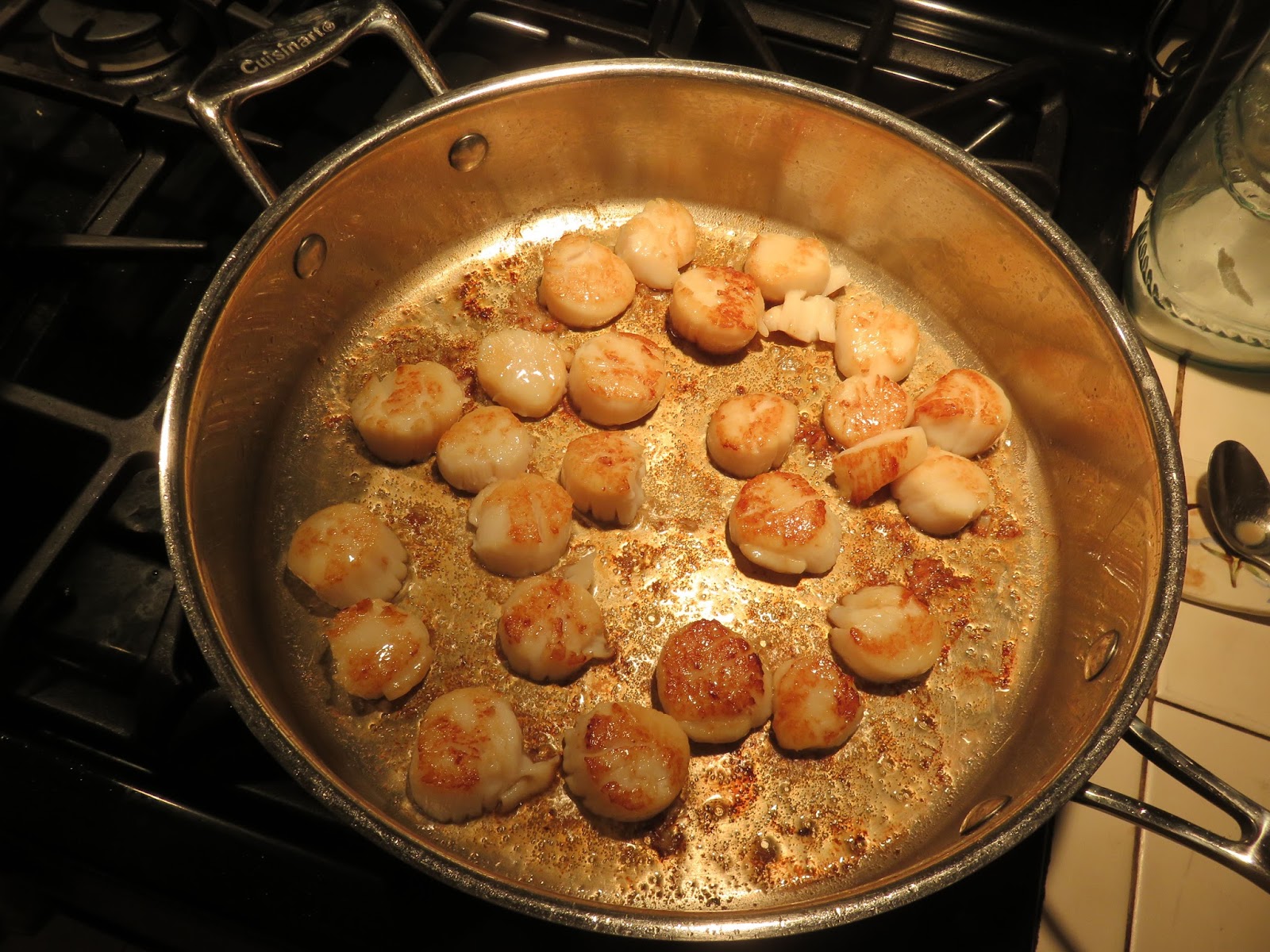
To cook the scallops, pat them dry and season them with salt and pepper. You can grill them quickly (I thought it seems kind of overkill to heat up a grill for 2-3 minutes of cooking, although I’m sure the flavor would be good). So for those of us who are lazy, lightly oil a saute pan and toss the scallops until cooked (1-2 minutes per side). Remove from the pan and set aside to keep warm.


Cook the linquine in a large pot of boiling salted water until al dente. Drain in a colander. Return the pasta to the pot and toss with the cream sauce (you could also save a little of the pasta cooking liquid and add that) and lemon juice. Taste for flavoring.

Serve the pasta on a plate or shallow bowl, and top with the scallops and any remaining sauce. Add a few herb leaves or sprigs for color. (You could also add a sprinkling of cheese of you want.)


 Serves 4.

 www.sheilaconnolly.com

I should be giving you lovely pictures of coming books, but the next one won't be published until the fall, or maybe January. Or the holidays.

Besides, I'm just a wee bit distracted by moving and such, but that should be over in a month or so.

My Irish collage in Garryglass
(in Irish it's 
An Garraí Glas)
which means Green Gardenwww.sheilaconnolly.com


Friday, May 3, 2019

Scallops with Beurre Blanc

Fresh sea scallops were on sale at my local supermarket this week. “On sale” was a bit misleading, since the sale price was enough to make you gulp, but what the heck, why not? I bought a pound.

My mother and grandmother liked scallops, but they were convinced the only “good” ones were the tiny bay scallops (whose shells are the ones you find on beaches in the summer). Sea scallops are bigger, but I’ve found they’re equally tender (and I haven’t found a shell for one yet!).

Then I hunted down a recipe. There weren’t a whole lot of them, but I stumbled upon Darina Allen’s version (she’s one of my cooking idols these days), which she calls “the most exquisite way to eat really fresh scallops . . . the most sublime combination of flavors.” After trying it, I agree.

Of course I tinkered with the recipe just a bit. And I must confess: while I’ve heard of it for years, mainly in French recipes, I have never cooked beurre blanc in my life. But my time had come.

Sauteed Scallops with Beurre Blanc

(this recipe makes two servings)

Beurre Blanc

You make the beurre blanc first:


Ingredients: 

2 Tblsp white wine
2 Tblsp white wine vinegar
1 Tblsp minced shallots
Salt and while pepper
1 Tblsp heavy cream
1 stick cold unsalted butter, cut into small cubes
Freshly squeezed lemon juice

Instructions:

Combine the wine, wine vinegar shallots and a little pepper in a heavy saucepan. Boil the mixture to reduce it to about one-half tablespoon.


Add the cream and boil until it begins to thicken.


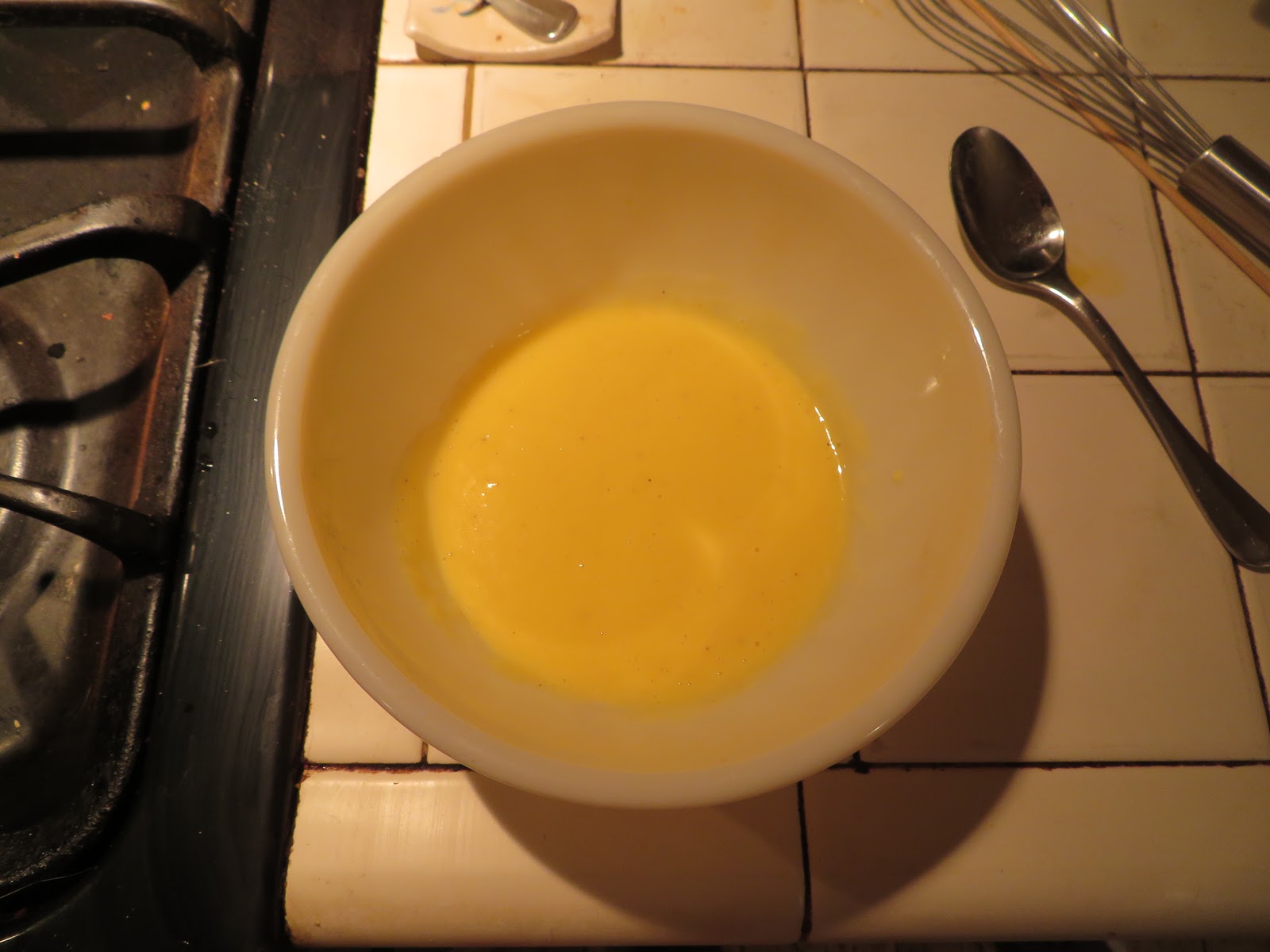
Whisk in the chunks of cold butter, a few at a time, while keeping the sauce warm.


Strain out the shallots (I used a slotted spoon), and season the liquid with salt, white pepper and lemon juice, to taste.


Keep warm (but do not overheat!) while you prepare the scallops.

Scallops:

About a pound of large sea scallops
Salt and black pepper

If the scallops are very thick, you can slice them in half to make equal rounds. 

Dry the scallops on paper towels, and season with salt and pepper. 


Heat a non-stick skillet and put in the scallops in a single layer (do not crowd). Cook on one side until they are golden, then turn and cook the other side.


Warm your plates. To serve, spoon a little of the warm beurre blanc on the plate, then arranged the scallop slices on the plate and add more sauce on top. Serve immediately.


I will confess that when I tasted the beurre blanc on its own I had my reservations. The sauce was tart and salty and pleasant enough, but it fell short of “exquisite.” But when I tasted the scallops and the beurre blanc together, I was blown away—the sweetness of the scallops paired beautifully with the flavors of the sauce. I must confess that I licked my plate.

Today I'll be in Bethesda, Maryland, with a gaggle of mystery writers, including a number of us from MLK. If you see us, stop and say hello! We'll be handing out recipes. And if I'm lucky, I may have a name for the Museum Mystery coming out in May--I hope!


Friday, June 15, 2018

Irish Seared Scallops

I’ve just read that the majority of scallops in this country come from New Bedford, Massachusetts, which is not far from where I live. While I grew up eating scallops, they were the cute little bay scallops—my mother and grandmother insisted they were more tender. As a result, I always expected big sea scallops to be tough and chewy.


I was wrong! Recently our local supermarket has been getting limited shipments of the big ones—only these are very local, never frozen, and soft as butter. And expensive! I was lucky this week because they’d just put the newest shipment out in the display case and they were on sale (at a mere $12.00 a pound! Ouch! But you only live once.). So I brought some home.

Scallops are delicate in flavor, but adopt other flavors happily. So I went hunting for a recipe that would not overwhelm the scallops but would enhance the flavor. (I had to laugh when my favorite fishseller whispered that some people think they smell bad. People, they come from the sea! What do you want them to smell like?)

In case you don’t know, the scallop (that we usually eat) is only the muscle that keeps the double shell closed. If there’s a chunk of orange stuff attached, that’s the roe, which is what, um, makes baby scallops. It’s a delicacy on its own. The point is, when you look at a nice clean scallop, imagine a shell that is much bigger.

This one happens to be an Irish recipe from County Clare, on the west coast of the island. You know—where the Atlantic Ocean is, so I assume there are scallops there too. But all the ingredients are widely available.


Seared Scallops from Clare

Sauce:

2 Tblsp dry white wine
2 Tblsp white wine vinegar
2 Tblsp minced shallots
1 bay leaf
pepper to taste
1/4 cup heavy cream
2 leeks (white part only), sliced
3/4 cup (1-1/2 sticks) cold unsalted butter,
   cut into small pieces
4 small tomatoes, diced


Instructions:

In a small saucepan combined the wine, vinegar, shallots, bay leaf and pepper. Cook over medium heat tof 8-10 minutes, or until reduced by half. Add the cream and the leeks and cook for another 3-5 minutes, until the leeks are nearly tender.

Everything chopped


Shallots
Whisk in the butter, one piece at a time, and stir until smooth. Add the diced tomato and cook for 1 minute.


Set aside and keep warm.


Scallops:

As usual, I made a half-recipe. The eight scallops below make up one-half pound. Yes, I ate them all!


3 Tblsp unsalted butter
1 lb sea scallops (patted dry)
1 cup seasoned bread crumbs*
1 Tblsp grated lemon zest

*to make bread crumbs, place 5-6 slices
of stale artisinal white bread in a food
processor. Add 1 tps each of dried parsley
(note: I don’t usually have dried parsley on
hand, because I think it tastes like nothing
at all. But don’t try to substitute fresh parsley
because that will make the crumbs mushy),
dried basil, dried oregano (or any other dried spices that appeal to you), and sprinkle with
salt and freshly ground pepper. Process for 15-20
seconds or until the mixture is ground into
fine crumbs.


Instructions:

Preheat the broiler. In a large ovenproof skillet melt 2 tablespoons of the butter over medium heat. Add the scallops and cook for 2 minutes on each side or until opaque (do not overcook!).


Sprinkle the scallops (still in the pan) with the breadcrumbs and the lemon zest and place the pan under the broiler about 4 inches from the heat for 2-3 minutes, or until the crumbs are lightly brown


To serve, place the scallops on plates and spoon the warm sauce over them.


And the verdict? The scallops are amazing--tender and delicate. The sauce doesn't overwhelm them (although I added a bit of salt at the end). The tomatoes pair well with them, with a touch of sweetness. I think I'll be making this recipe again.


If you haven’t heard the shouting, my next book, Murder at the Mansion (coming in eleven days!), has been getting some wonderful reviews.

Here’s what Library Journal said: Connolly’s accomplished series launch … incorporates humor, a realistic setting, and well-developed, appealing characters.

And then Kirkus wrote: The prolific Connolly kicks off a new series that skillfully combines history, romance, and mystery.

Wow! somehow I've managed to combine humor, a realistic setting, appealing characters, history, romance and mystery, all in one book. I'm not quite sure how I did that, but I won't argue! That certainly makes me happy since it’s the first book of a new series, and my debut book with St. Martin’s Press.

Find it for preorder at Amazon and Barnes & Noble

Friday, February 16, 2018

Dulse Chowder a la Sam Sifton

I am a big fan of writer Sam Sifton’s recipes, which appear regularly in the New York Times Sunday Magazine. I’ve even added a few of them to my favorites.

But this past weekend I found a happy surprise in the magazine section: I’d beaten him to the punch with my use of dulse! (That's seaweed, remember?) Oh, I’m sure he’s known about it and been cooking with it for years, but I shared the stuff with you first!

His recipe was for a seafood chowder, and if you think about it, combining seafood and seaweed makes perfect sense. But I had some reservations about using some of his choices. For one thing, he called for clams, and I have never had a clam dish that did not include some sand. My teeth don’t like sand.

He also used bacon. Now, I love bacon, but I think it might overwhelm the delicate flavors here, so I swapped in salt pork. And he added fish. I like fish, but not quite as much as he wanted. So I decided to cut back on the fish (I used fresh cod), and doubled the amount of scallops (also fresh and local), which are suitably delicate in flavor and texture.


Dulse Chowder

Ingredients:


2 tablespoons butter
1/2 cup salt pork, diced
2 tablespoons dulse flakes (soak them first)
1 medium onion, sliced
2 carrots, peeled and halved, then sliced
2 parsnips, peeled and halved, then sliced
2 medium-size all-purpose potatoes, cubed
1 cup dry white wine
3 cups clam or fish broth
3 sprigs fresh thyme
2 bay leaves
2 cups heavy cream
Freshly ground black pepper to taste
1/2 pound firm white fish fillets, cut into 1-inch cubes
1 pound sea scallops, sliced into rounds if very large
1/4 cup chopped parsley


Instructions:

In a large pot, put 1 tablespoon of the butter, and turn the heat to medium-low. Add the salt pork and cook, stirring occasionally, until the fat has rendered and the pork has started to brown, approximately 5 to 7 minutes. Use a slotted spoon to remove the pork bits from the fat, and set aside.


Add the dulse and the onion to the fat, and cook, stirring frequently, until the onion is soft but not brown, about 10 minutes. 


Add the remaining 1 tablespoon butter, then stir in the carrots, parsnips, potatoes and wine, and continue cooking until the wine has evaporated and the vegetables have just started to soften, approximately 5 to 7 minutes. 


Add enough broth to just cover them. Add the thyme sprigs and the bay leaves.


Partly cover the pot, and simmer gently until the vegetables are tender, approximately 10 to 15 minutes.

When the vegetables are tender, add the cream, and stir in the reserved pork bits. Add black pepper to taste. Let come to a simmer. (Do not let chowder come to a full boil or it will curdle.) Remove the thyme and the bay leaves and discard.


When you’re ready to serve, slip the fish pieces and scallops into the liquid allow them all to cook into translucence in the heat, approximately 5-7 minutes. 


Season to taste with salt and pepper, and serve, garnished with the chopped parsley.


The dulse gives the chowder a slightly sweet flavor which pairs well with the scallops (which should be barely cooked and very tender). The hardest part of making this dish (apart from finding dulse) is all that chopping, but it’s worth it.


Many a Twist (Crooked Lane Books), available now!

This is a dish that should be on the Crann Mor menu! It's earthy and exotic at the same time.


www.sheilaconnolly.com

Friday, November 3, 2017

Scallops with Ginger and Lemon Sauce

I may have mentioned that our town has acquired a new restaurant, The Charred Oak Tavern, in the large space that used to be a cooperative antiques center. It’s smack in the middle of town—where the town sorely needed a new restaurant.

We’ve actually eaten there more than once since it opened in July, with and without guests, because it’s a restaurant that’s pitched exactly right for its customers. It has a large and well-stocked bar (no, that’s not the most important thing) and a menu that is not too fancy for walk-ins, even those with children, but the recipes are carefully chosen and well-prepared. A hamburger there is not just a hamburger—it’s one you will remember and come back for again.

That’s where I ran into this dish. I have to point out that we’re not that far from the ocean here, and fresh scallops are easy to get. What impressed me, though, was that the sauce was not too heavy-handed. If you put citrus and fresh ginger in a dish like this, they can easily overwhelm the delicate flavors of seafood. Not in this case: everything worked together in harmony.

So of course I had to try it. And maybe I’ll have to go back to the restaurant to make sure I got it right, don’t you think? I want to make sure they stick around!


Scallops with Ginger and Lemon Sauce

Ingredients:

1 pound large sea scallops
2 tsp sesame oil
1 tsp peanut oil
2 small shallots, chopped
1 tsp fresh ginger, grated
1/4 cup white wine
2 Tblsp lemon juice
2 Tblsp soy sauce
pinch of crushed red pepper
1 tsp water
1 tsp cornstarch


Instructions:

Pat the scallops dry with paper towels (otherwise they will not brown) and salt lightly. 

Chop the shallots and mince (or grate) the fresh ginger.


Heat the sesame oil and peanut oil in a cast-iron or similar heavy skillet over high heat. Saute the scallops quickly in the hot oil for 1-2 minutes per side. Remove from the pan and keep warm.


Before . . .


and after

Add the chopped shallots to the pan and saute briefly until soft. Then add the ginger, wine, lemon juice and soy sauce and bring to a boil. Reduce the heat and simmer for about three minutes. Taste and add the red pepper if you like and adjust for salt.


Combine the water and the cornstarch, then stir into the sauce. Cook just until the sauce begins to thicken. Add the scallops to the pan and toss to coat with the sauce.


Serve with rice or rice noodles.

Note: I’ve seen several recipes for this dish that used orange juice rather than lemon juice. I find the orange flavor kind of overwhelming. The lemon juice is tart, but the scallops are a bit sweet, so they balance each other nicely.

In case I haven’t yelled it often enough, next Tuesday is the release day for the eleventh Orchard Mystery, A Late Frost. In honor of that I’m offering a copy of the book to one lucky person who comments—and tells me whether you like scallops.


In A Late Frost, the usually quiet town of Granford, Massachusetts, is even drowsier during the colder months. But this year it’s in for a jolt when Monica Whitman moves into town.


She’s a dynamo who wants to make friends fast in her new home, and she throws herself into community activities. She’s already sold the town board on a new, fun way to bring in visitors during the off-season: WinterFare, which will feature local foods (such as Meg’s apples) and crafts, as well as entertainment. 

Tragically, Monica falls ill and dies after the event in what looks like a case of food poisoning. When all the food served at WinterFare has been tested, including Meg’s apples, it becomes clear that there’s a more complicated explanation to the older woman’s sudden demise. 


Heirloom apples from my own
trees (and yes, they're supposed
to look blotchy like that!)
Find it at Amazon and Barnes and Noble.


www.sheilaconnolly.com


Friday, May 15, 2015

Scallops with Ginger-Soy Aioli

by Sheila Connolly


You know you’re a foodie when the first thing you do when visiting the country’s great cities is find a market.

I just came back from a conference/research trip (the MWA Edgar Awards, Malice Domestic, and an upper-crust party in Philadelphia) that took twelve days and covered multiple states. I’m not complaining (except for the humongous suitcase that I came to hate and would gladly have tossed under a train), although I think I left my brain somewhere along the way. But worth it!

Grand Central Market


The first stop was New York, where the conference hotel sat literally atop Grand Central Station. While I had taken trains in and out of there in the past, I never realized there were other parts of the station I knew nothing about. Thanks to a friend who dragged me off to lunch, I discovered the Market and the Food Court. Oh joy.

I ended in Philadelphia, where I used to work. The first thing I did (after checking into my hotel and getting rid of that suitcase) was to head straight to the Reading Terminal Market and eat a cheese steak at the Down Home Diner. The market has been around for well over a century and has an amazing array of foods. I try to stop in every time I’m in town to buy mushrooms (did I mention that Pennsylvania is the mushroom capital of the world?) that I can’t get anywhere else. Chanterelles (you don’t want to know how much they cost), hen of the woods, beech mushrooms, oyster mushrooms, trumpet mushrooms—I snagged them all, and this week my husband and I are eating a lot of mushroom recipes (starting with a lovely risotto…).

Philadelphia's Reading Terminal Market
Mushrooms--yes, I bought them all

But the recipe I wanted to share came from my hotel in Philadelphia, Morris House. A colleague alerted me to its existence a few years ago. It’s a tiny place (15 rooms) in an 18th century house in center city, close to all the historic monuments I want to visit. It has been lovingly restored, and each room is different. Where else can you find a real fire burning in the fireplace in the breakfast room?

It also has a restaurant called M. In last year’s book in the Museum Mysteries series, Razing the Dead, I set a romantic scene there, between my protagonist Nell Pratt and her FBI whatever-he-is James Morrison. Nell is sure he’s trying to break off their relationship (she was wrong). For details you’ll have to read Razing the Dead and the forthcoming Privy to the Dead.

I ate at the restaurant in honor of Nell and James. In the kitchen the woman chef called out orders to the kitchen staff, and I was reminded of Gordon Ramsay. I like to know how things work, including kitchens. Gordon came to mind again when I ordered the scallops (if the show Hell’s Kitchen is any indication, Gordon doesn’t think anyone in the world can cook scallops right).

I’m getting to the food, really. After all this, I’m giving you a quick and simple recipe.


Scallops with Ginger-Soy Aioli

I wish I could tell you that I went to the kitchen and demanded this recipe after the first bite, but I managed to restrain myself.

1/2 cup mayonnaise (if you’re a purist you can make your own—I used Hellman’s)
3 Tblsp soy sauce
1 Tblsp coarsely grated fresh ginger
1 Tblsp fresh chives, diced finely
Juice of half a small lemon

Simple, isn’t it? Just mix them together and you’re good to go. One piece of advice: taste as you add the ingredients. The amounts are suggestions, and you can tweak them as you like. You could also add garlic (with restraint!), or cayenne (just a dash) or horseradish (a pinch).

The aioli--looks so innocent, doesn't it?

Sauté your scallops briefly in butter, with the aioli on the side for dunking. Serve immediately with salad greens lightly tossed with vinaigrette. I found that the scallops are the perfect complement to the aioli, because their sweetness cuts the tartness just a bit. But you can use any white fish. Heck, use the stuff as a marinade for chicken—it’s that good.

Look, Gordon--I can cook scallops!

BTW, for a cheese course I ordered unpasteurized sheep cheese (which the menu described as “musty”), which came paired with a dollop of butterscotch sauce. I know, it sounds crazy—but the combination worked. That invisible chef has a wonderful sense for flavors.


Privy to the Dead (Museum Mystery #6), coming June 2nd!

Nell Pratt, president of the Pennsylvania Antiquarian Society, has something to smile about thanks to a generous donation from a major Philadelphia developer who’s willing to help update their museum. But renovations have barely begun when a man is struck by a car in front of the building and killed.

The victim is a construction worker who found a curious metal object while excavating an old privy in the museum’s basement. Nell thinks the death is somehow connected to the Society, and her suspicions are confirmed when an antiques expert reveals a link between the objects from the cellar and a fellow staff member’s family.


Now Nell must unearth a mystery with ties to the past and the present. Because when someone is willing to kill over scrap metal, there’s no telling what they’ll do next…


Available now for pre-order from Amazon and Barnes and Noble.