Showing posts with label Philadelphia. Show all posts

Friday, June 28, 2019

COD WITH CHEESE SAUCE


The cod loins were back at the market this week. My fish lady told me that the loin in the biggest part of a cod filet, and the price reflects that but I bought one anyway. I already had a recipe in mind. This one comes from an Irish cookbook, but it’s very flexible—you can make it with or without mushrooms, or substitute whatever other vegetable you feel like. As for cheese, pick your favorite semi-hard cheese (which is gratable). If the sauce seems too thick, just add a little more milk. And taste as you go—I found that the lemon juice, even in small amounts, made a definite difference in flavor.

Cod with Cheese Sauce

Ingredients:

3/8 cup whole milk

One slice of onion
3 peppercorns
1 bay leaf
3 parsley stalks
1 oz. butter
1/2 pound cod fillet
1 oz. mushrooms (whatever type you prefer, chopped or sliced)
1 scant oz. flour
1 Tblsp lemon juice
Salt and pepper
2 oz. Cheddar cheese, grated

Instructions:


Put the milk in a small saucepan along with the onion slice, peppercorns, bay leaf and parsley stalks. Bring to a boil, then remove from the heat and let “infuse.”


In a different saucepan melt the butter, then brush a little of it on an ovenproof pie dish. Cut the cod into strips, then lay the strips in the pie dish and scatter the mushrooms on top.


Add the flour to the remaining butter in the saucepan and whisk to blend. Strain the milk and stir it into the flour-butter mixture until it’s smooth. Bring to a boil and cook until it thickens. Add the salt and pepper, a dash of lemon juice, then 2/3 of the cheese and stir until smooth. When the cheese is melted, pour the sauce over the fish and mushrooms. Sprinkle with the rest of the cheese.


Preheat the oven to 350 degrees. Cook for 20-25 minutes, or until the top is golden brown.


Note: you could also make this in individual ramekins (about 1/2 pint each for single servings).


At last! The newest Museum Mystery is coming out today!
 The New York Times bestselling author of Dead End Street returns with Nell Pratt discovering one of Philadelphia’s darker buried secrets . . .


When a summer intern at the Preservation Society discovers an aged document hidden in the binding of an antique book, Society president Nell Pratt is intrigued by the possibilities: is it a valuable historic document or just a useless scrap of paper? When analysis reveals that it’s a hand-drawn map of one of Philadelphia’s oldest neighborhoods, Nell learns that the area is being excavated for a new real estate development and may hold long-buried secrets from the city’s historic heyday.
Determined to get to the bottom of the map’s origin and what it might tell her about the mysterious plot of land, Nell will have to contend with a construction company owner who disappears, a former Society board member who’s harbored a dark secret her entire life, and a remarkable discovery that may have the dead turning over in their graves . . .
You'll never look at Philadelphia in quite the same way
Available in print and e-book formats.

www.sheilaconnolly.com

Friday, April 12, 2019

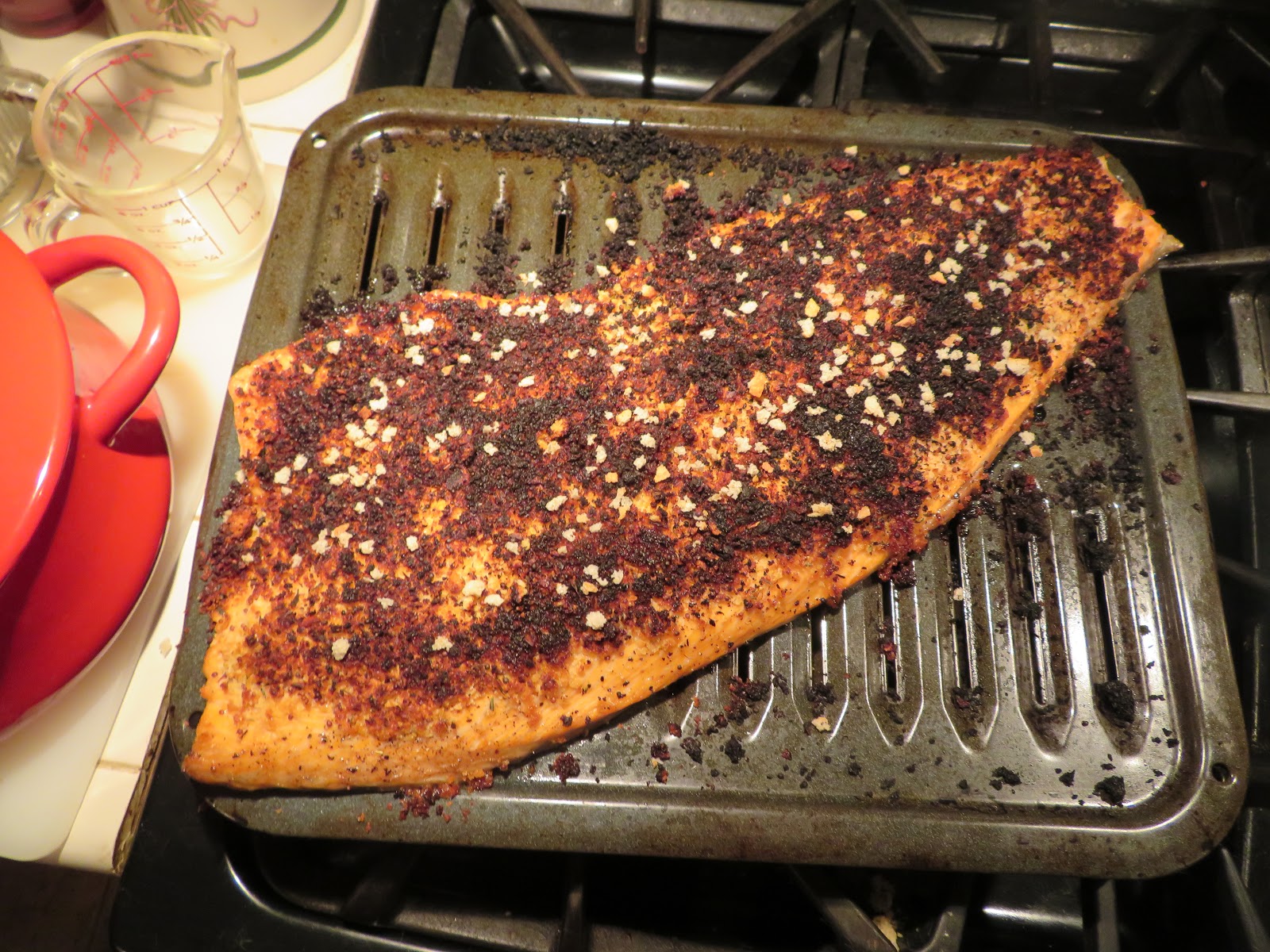
Crunchy Mustard Salmon

A few weeks ago the Boston Globe ran a great full-page article entitled “Navigating the Confusing World of Salmon” and recommended which salmon you should buy to cook. In case you haven’t been looking lately, there is farmed salmon from Norway and Iceland, wild Alaskan Salmon, Faroe Island salmon (mostly in restaurants rather than markets), and farmed North American salmon (from Canada). And don’t forget salmon from British Columbia and Scotland.

But there is one glaring omission: Irish salmon. The Irish seafood market is booming, growing from year to year, and salmon leads the pack, er, school. Much of the fish goes to the European Union, including the U.K. (unless Brexit messes things up).


Of course some of it stays in Ireland, and I know a lovely small company that makes delicious smoked salmon in Union Hall on Glandore Harbour in West Cork, and they sell it at the Saturday farmers market in Skibbereen.

I like to cook salmon and I like to eat it. It’s a sturdy fish and it’s hard to overcook. And it looks pretty on a plate. So of course I have assorted salmon recipes (many of which I’ve posted here on Mystery Lovers’ Kitchen) and I’m always looking for more. Here’s one that’s new to me, and it’s Irish.

Crunchy Mustard Salmon

Ingredients:


2 salmon fillets (about 6 oz. each)
(actually I fell in love with a single slab of salmon so
bought that instead)
Freshly ground pepper
Sea salt
1 Tblsp unsalted butter, softened
1 Tblsp whole-grain mustard
1 Tblsp Dijon mustard
1 tsp fresh thyme (dried if you must)
2 cups dried bread crumbs or panko for coating

Instructions:

Preheat the broiler to high and set the rack to 6-12” below the flames (not too close or the coating will burn before the fish cooks—keep an eye on it)
If you’re using breadcrumbs you can make your own in a food processor, but don’t make it too fine.

Season the fish fillets with salt and pepper.


the crumb mixture
In a bowl, mix the crumbs or panko, the butter, the two mustards and the thyme. With your fingers or a fork, mix together roughly until the mixture sticks together. Season with salt and pepper.

Spread some butter on the bottom (skin-side) of each salmon fillet, place butter-side down in a preheated oven-proof skillet, and sear over medium-high heat for about 2 minutes. Don’t move it around—you want a nice crispy crust.


Press the rest of the crumb mixture into the top side of the salmon (still in the skillet), and slide under the broiler. Broil just until the top crumbs are crunchy and browned, about 4-5 minutes, and serve immediately. (A green vegetable like asparagus makes a pretty pairing.)


The next Museum Mystery is still hovering in the wings, waiting for its title. It should be available next month. I hope.

In an odd twist of fate, yesterday I received an email from the "real" president of the venerable Historical Society of Pennsylvania (the model for the Society in the series) where I worked for several years, announcing that they were cutting staff by 30% for financial reasons. They have an incredible collection of historic resources, but there's never enough money. 

I wonder if I can send Nell Pratt in to rescue the place?


Friday, March 15, 2019

Irish Blue Cheese Potato Cakes


In case all the shamrocks plastered all over everything haven’t clued you in, this Sunday is the day we (Irish and other folk) celebrate Saint Patrick’s Day. As I may have mentioned, I’ve been collecting Irish cookbooks for quite a while, and wow, have they improved in recent years! The old standards are still there—Irish stew, Colcannon, boxty, corned beef and cabbage and the like—but also great seafood dishes and wonderful cheeses have appeared.

And don’t forget potatoes! I was trolling through a book of regional recipes collected by Margaret Johnson and came upon the recipe for potato cakes with blue cheese, that originated in a vegetarian restaurant in Cork. I wish I could say I’d been there, but every time I’ve driven in Cork city I get lost. I’ve never stopped to eat anything there.

But this recipe sounds both creamy and tangy, with assorted herbs and spices added, and it would make a great side dish.


Blue Cheese Potato Cakes

Ingredients:


1/2 pound baking potatoes, peeled and cut into 2-inch pieces
2 Tblsp unsalted butter
2 Tblsp minced fresh chives
1 Tblsp minced garlic
Salt and pepper to taste
2 Tblsp fresh dill, minced
2 Tblsp fresh flat-leaf parsley, minced
1 cup (4 oz.) Cashel Blue cheese, crumbled
     (or any other blue cheese you like)
1 egg yolk
1 cup all-purpose flour

2 eggs beaten with 1/2 cup milk
1 to 1-1/2 bread crumbs (you can add dried herbs, salt and pepper)
1 to 1-1/2 cups canola oil

Instructions:

Cook the potatoes in boiling salted water for 12-15 minutes, or until tender. (Note: be sure to use baking potatoes, which have a coarse texture when cooked and will hold together well.)


Drain and mash the potatoes.

Butter, garlic and chives
In a small skillet, melt the butter over low heat. Cook the chives and the garlic for a minute or two, until they are just soft. Stir the herbs into the mashed potatoes. Then stir in the salt, pepper, dill and parsley. Remove from the heat and let cool completely. 


Stir in the cheese and egg yolk (the cheese can remain lumpy).

Form the potato mixtures into cakes and refrigerate for 10 minutes to firm up. Dredge the cakes with flour and coat with the egg/milk mixture, then coat with the bread crumbs.


The crumbs make these nice and crispy
In a large skillet, heat the oil over medium-high heat. Add the cakes and cook for 3-5 minutes on each side, until they are browned.

No, the potato cakes are not gigantic--that's a Cornish
game hen on the left!
You can eat them right away, or save them until the meal. If you do save them, place the cakes on a baking sheet and reheat in a 250-degree oven for about five minutes.

Serve with a dollop of sour cream or crème fraiche if you like (but there are already plenty of flavors in the cakes).

I'm still polishing the next book, which doesn't have a title yet. I keep thinking "The Hole in the Wall Gang" (my homage to Butch Cassidy and the Sundance Kid), but it doesn't really fit, even though there is a hole in the wall in the story which plays an important part. Stay tuned!

www.sheilaconnolly.com

Friday, March 1, 2019

Quick-Roasted Chicken


Last week I promised you something from Sam Sifton, the food editor for The New York Times and a good model for MLKers. As a reviewer, he gathers a lot of recipes from chefs and restauranteurs. What’s more, he includes at least one no-recipe recipe each week in his Times food newsletter. A week ago he published over forty of them and they appeared as a full-size standalone insert in the newspaper. Of course I saved it, and I may be making these for a long time. What I particularly admire is that he encourages a cook not to worry about measurements and finicky details—just make the dish. And use plenty of herbs and spices.

One note: he uses chicken thighs in most of his chicken recipes. I understand why: they cook well and remain moist and they’re a convenient single-serving size. But I’ve never been a fan of chicken thighs, or even chicken legs (not since I was about eight and my mother let me pick up the leg at dinner and gnaw on it). So I have substituted chicken breasts, which I (and my cats) prefer. Just don’t overcook them.


Sam Sifton’s Quick-Roasted Chicken

Ingredients:


Fresh chicken breasts (or thighs, if you must)
Mayonnaise
Dijon mustard
A lot of chopped fresh tarragon
Salt and pepper
Bread crumbs (I made my own)

(You’ll notice there are no amounts given. Just mix up enough of the coating to cover however much chicken you’re making.)

Instructions:

Preheat the oven to 400 degrees (yes, hot).


Mix together a bunch of mayonnaise, some Dijon mustard, and lots of tarragon in a roomy bowl.


Season the chicken pieces with salt and pepper, then add them to the bowl with the mayonnaise mixture and toss them to coat them evenly.


Grease a sheet (flat) pan and put the chicken pieces on the pan. Cover each piece with a healthy handful of bread crumbs, then press the crumbs so they stick to the chicken.

Bake in the hot oven for about half an hour, then test for doneness. If they’re not quite done, cook for another 5-10 minutes. The chicken pieces should be golden brown with a crisp bread-crumb crust.


Serve with whatever you like—rice, potatoes, salad or other veggies.


Doesn’t get much easier than that, does it? Thank you, Sam Sifton.

Shameless self-promotion: The book queue is lining up fast. Next in line is a new Museum Mystery, which will have a title (and a cover!) very soon. It should appear in April, from Beyond the Page Publishing.

In case you're wondering, that's the "real"
Society in Philadelphia, where I worked for
several years.
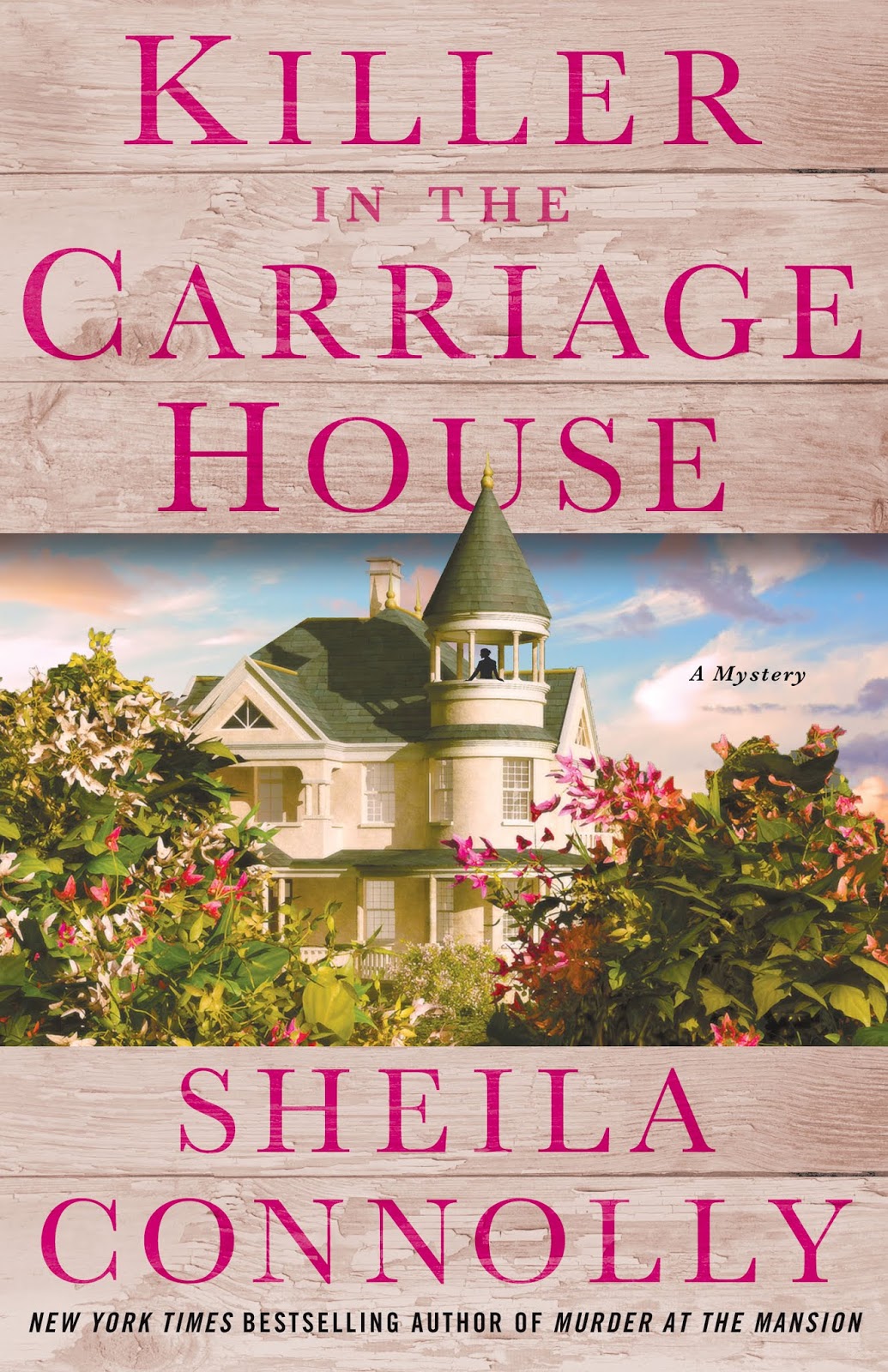
And then there will be Killer in the Carriage House, the second in the Victorian Village Mysteries in July!

Kate Hamilton is trying to save her struggling home town of Asheboro, Maryland, but there's no money available and nothing there to attract tourists. But Kate is determined to find a way--as soon as she solves the second murder since she arrived.

Friday, June 3, 2016

Cheesecake in a Bowl


In honor of the imminent release of Dead End Street next week, I thought I’d revisit Philadelphia food. I wrote a post about it when the Museum Mystery series debuted, back in 2010. If you take a look at that, I gave a basic primer on the food most often associated with that city. Let me add a few that I missed last time: Philadelphia spawned Cheez Whiz, Good & Plenty, Herr’s (potato chips—my daughter’s suburban school actually took a field trip to their plant), Tastykake, and Fleer Chewing Gum (home of Double Bubble, my childhood favorite--my commuter train used to go by the factory).

But whenever I'm in Philadelphia I keep coming back to the Reading Terminal Market—and I send Nell Pratt there every chance I get. The place has a long history (which I will shorten here for you): it occupies the space under what was once the Reading Railroad Terminal in Center City, close to City Hall. The Terminal opened in 1893, and the market beneath has been there ever since (even though trains no longer run into the terminal: it’s the Pennsylvania Convention Center now, but the market survives, and didn’t even close during the construction of the convention center above it).

The market has just about everything: meat, fish, fruits and vegetables. Ice cream and candy (including some really weird chocolates). Cookware and cookbooks. Great places to grab a lunch, which many nearby workers do. I try to visit every time I’m in Philadelphia, and I come home with whatever I can carry (note: some items do not fare well in a suitcase!). There are Asian and Amish and Italian vendors, and just about anything else. It is one of the great treasures of the city, and it’s always full of people.

Ah, food. What have I bought and enjoyed? Mushrooms (which I’ve also written about for MLK). Meat from the Amish butchers. Chocolate Liberty Bells. Great lunches at the Down Home Diner (yes, I’ve even eaten a cheese steak there). It’s a great space to stroll through, and even if you aren’t hungry when you walk it, you will be after a few minutes.


Recipe? What better than a cheesecake made with the Original Philadelphia brand cream cheese? According to their website, the name "Philadelphia" was adopted in 1880, because the city “was considered at the time to be the home of top quality food.” And it came in foil wrappers even then. (Oddly enough, the parent company resides in the UK.) There have been a few changes in ownership since 1880, not to mention a variety of new! trendier! products, but the Philadelphia name is still on the package. And I firmly believe it is the best cream cheese to use for cheesecakes.

You would not believe how many cheesecake recipes the company offers (twelve pages worth), but I wanted to use something fairly classic, and also take advantage of the ripe strawberries available now. So I tinkered with a few recipes, and here’s the result!


Cheesecake in a Bowl
Ingredients:

1-1/2 cup crumbs (cookie, graham cracker, whatever—I used Sandies)
3/4 stick (3 oz.) butter, melted


1/2 pound block cream cheese, softened
4 oz. white chocolate chips
1 cup heavy cream
1-1/2 Tblsp granulated sugar
1 tsp gelatin, dissolved in 1-1/2 Tblsp boiling water (stir quickly to dissolve!)


2 cups strawberries, pureed (you can put them through a sieve if the seeds annoy you)—or you could just mash them up
2 Tblsp confectioner’s sugar

A few fresh strawberries, sliced or quartered, for garnish


Instructions:

Crumbs and butter, mixed
For the crust layer: combine the crumbs and the butter, then press into the bottom of serving glasses. [A note: you can divide this into as many portions as you like. I happen to have four glass bowls that actually match, so I went with those. Splitting this among six bowls would still be an ample serving size.] Chill.


For the filling: Melt the cream cheese and the white chocolate in a bowl over simmering water, or in a double boiler [you could probably do it in a microwave, but I wasn’t sure of the timing or temperature]. Mix and let it cool for 10 minutes.


Whip together the cream and sugar until stiff. Add the dissolved gelatin to the cream cheese mixture, then fold in the cream.


Taste the pureed strawberries and add confectioner’s sugar if necessary.

First layer
Second layer

Spoon half the cream cheese mixture over the crumb layer in the glasses or bowls, then top with half the strawberry puree. Repeat. Take a knife and gently swirl the layers together just a bit.


Chill for two hours or until set. When you’re ready to serve, garnish with the fresh strawberries.


Dead End Street will be released next Tuesday, June 7th. The cover shows you the part of Philadelphia you don't want to visit. But it's a wonderful city, with great history, amazing museums, and good people working to make it a better place. Definitely worth seeing!

Find it at Amazon and Barnes and Noble.

www.sheilaconnolly.com


Friday, May 27, 2016

Ginger Biscuits

Here at MLK we offer you all kinds of recipes: treasured family favorites, crazy things we’ve stumbled over in our travels, quick and easy ones, innovative ones. Everything you will ever need! Which means we’re always looking for another recipe.

Recently at Malice Domestic I stopped at the vintage-bookseller’s table. They always put it right next to the entrance (how cruel!). I should know by now to shut my eyes and march past, but I don’t.

This year’s prize is The Complete Illustrated Cookery Book, with no apparent author, edited by “CHEF.” It contains “Over two thousand recipes” plus hints on just about everything else related to food and kitchens. There are pictures, some in color (all of which the editor promises were made from recipes included in the book). It was published in England in 1934.


The world has changed a wee bit since then. The thing weighs several pounds and is 2-1/2 inches thick, with small print. I sat myself down with it to skim through it, and ended up laughing hysterically. You’ll see why when I give you only a few examples of suggested recipes:

Baked Eels: to skin an eel, hold it with a cloth. The head should be cut off, the skin turned back at the top all round the neck, then drawn downwards. Draw the head one way and the skin the other. Open the fish and remove the inside. Cut off the back bristles. [Needless to say, I will not be cooking eel any time soon.]

To Dry Haddock at Home [another “I don’t think so” recipe]: Remove the eyes, the gills and the inside, and cleanse the blood from the backbone… Now fill the body and eye sockets with salt.”

Liver Crepinettes: One can buy pig’s caul from the butcher. [Not in this town!] …rinse it well and cut it in pieces with a pair of scissors to any size desired. [How do I know what size pieces of pig’s caul I want?]

But wait! There’s more!

Calves Brains en Matelotte: The brains should be washed in cold water with a little salt. Take away the loose skin and any clots of blood…

Is it just me or is this beginning to sound like a CSI episode?

Here’s a good one: Stewed Tendons of Veal [Yes, you read that right—the tendons, aka the gristles—do something else with those nice tender veal breasts they were attached to.]: Put them [the tendons] in a stewpan…put the pan over the fire, then simmer for 4 hours. [To serve] arrange the tendons in a circle round a dish with a fried crouton between each and fill the centre with a puree of green peas. [Are you hungry yet?]

And it goes on. There is a recipe for Larks a la Bourgeoise (doesn’t say where to get the larks); for a Pupton of Pigeons (which in addition to pigeons includes 1 sweetbread, ½ pound of bacon, and 1 ox palate (???). Later there is a recipe for a Turkey Stuffed with Truffles [really?], and instructions for How to Truss Blackcock [excuse me, I wouldn’t know a blackcock if I met one—apparently it’s a kind of black grouse]. The instructions include “scald the feet, peel off the skin, and cut off the toes.” And if you leave the head on, you must remember to tuck it under one wing. And finally, there’s Rook Pie (you must be sure to remove the backbone, else it will be bitter). [Would a crow do?]

Oddly enough (by MLK standards, at least), there is much more emphasis on meat and poultry than on desserts or sweets. But it may be revealing that a former owner marked very few pages—and the one for Rich Bride Cake was one of them. There is (hard to believe) only one recipe for Cookies in the book, with the notation “(An American Recipe).” It involves boiling them in lard. No thanks.

What? You want a recipe? I will gladly offer you Ginger Biscuits.


Ginger Biscuits

Ingredients:

1/2 lb flour
Pinch of salt
1 tsp ground ginger (you can use more)
4 oz butter
4 oz castor (white) sugar
2 eggs

I don't know what I did before I
had a kitchen scale! (BTW, it also
works for postage.)


Instructions:

Mix together the flour and salt with the ginger in a basin. Beat the butter and sugar to a cream. Add the eggs one by one, beating each in well, then gradually stir in the flour. Should the mixture be too dry, add a very little milk.


About a tablespoon?

Drop spoonfuls of the mixture on greased paper on a greased tin a very short distance apart. Put them into a rather slow oven [I guessed 325 degrees, and I found 20 minutes worked well at that temperature] and bake a pale brown for 15 to 20 minutes. Note, Ginger Biscuits do not become crisp until they are cold.


That’s the recipe as given. I love the way older cookbooks assume you know what you’re doing in the kitchen and can fill in the blanks! You will note a few rather vague points, like the temperature of the oven, and the size of the spoon. I beefed up the ginger and the butter, and everything worked fine. I will say I approve of the greased baking sheet plus the greased parchment paper—the cookies slid right off.


Actually the cookies or biscuits were rather nice—not too sweet, not too spicy, and easy to make. I might just keep this recipe handy.


Hey, less than two weeks before Dead End Street hits bookstore shelves everywhere! 

No recipes, but I did send Nell back to the Reading Terminal Market again in the book. I can't stay out of that place! Maybe next week I'll give you a Philadelphia recipe? (Not scrapple, I promise--the less you know about that, the better.)

Dead End Street is available for pre-order at Amazon and Barnes and Noble.

www.sheilaconnolly.com