Showing posts with label Killer in the Carriage House. Show all posts

Tuesday, July 9, 2019

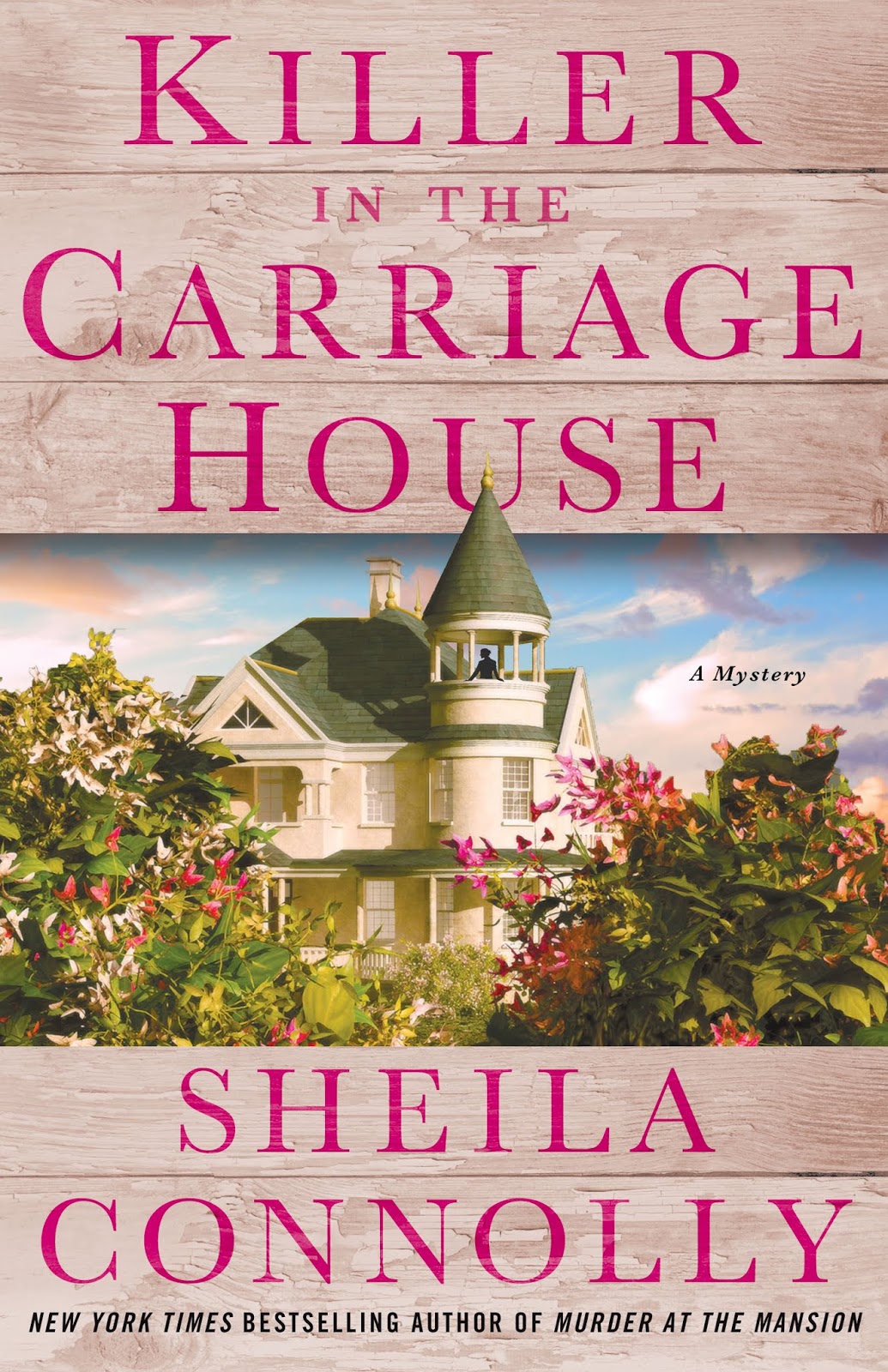
RELEASE DAY NEWS: Killer in the Carriage House by Sheila Connolly


Congratulations to our own... 


On the release of her new
Victorian Village Mystery

KILLER IN THE CARRIAGE HOUSE 


The second book in the Victorian Village Mystery series from New York Times bestselling author Sheila Connolly! 

After fifteen years away, Kate Hamilton never expected to end up back in her hometown of Asheboro, Maryland full time. And she definitely didn’t expect to be leading the charge of recreating the town as a Victorian village and tourist attraction. But as unexpected as the circumstances are, Kate is ready to tackle them.

The town, on the other hand, is going to take some convincing. Ever since Henry Barton’s shovel factory closed down, it’s started to seem like there are more tumbleweeds than tourists rolling down Main Street. Kate’s ideas are good, but ambitious—and her friends and neighbors are worried that finding the money for them would push the town even further into debt.

Luckily, Kate and the handsome historian Joshua Wainwright are two very determined people who may have come up with a solution. The Barton mansion, meant to be the centerpiece of the Victorian village, has proven to be a veritable goldmine of documents about the town’s nineteenth-century history, and Kate is convinced the papers hide something of value. When a dead body turns up in the town library—mere hours before the documents were meant to arrive there themselves—Kate begins to worry that the papers spell danger instead of dollars. It seems that someone doesn’t want these forgotten secrets coming to light, and they’ll do whatever it takes to keep Kate quiet…

KILLER IN THE CARRIAGE HOUSE


To learn more or buy,


CLICK HERE


📖


Click to see more of our
upcoming releases.

Friday, June 7, 2019

Spinach and Feta Torte a la Plaza Athenee in Paris


The battle to clear out the house to sell it goes on, with a fair share of unexpected discoveries (including a number of things which never were unpacked after the last moves in 1987 and 2003). I’m beginning to think that attics are like black holes.

This week’s find: a box with assorted significant documents (like an truly important paper I wrote for Honors Biology in high school, titled "Compost Fertilizer and Beans," which is about making compost from garbage). But the first thing I found in that box was an issue of Gourmet Magazine from 1983. I recognized the cover photo immediately: the Plaza Athénée courtyard restaurant in Paris. Why? Because I had lunch there with my godmother (whose husband was in Paris for a business meeting and she tagged along and was staying at the very posh hotel and invited me to lunch there) in 1976, two weeks before I got married (I was in France doing some last-minute thesis research.)


It was a lovely place in the heart of the city. I blush to admit that I don’t remember what I ate there, but what I do remember is the bottle of red wine that my godmother ordered to go with the meal. She was a thrifty woman, and when we didn’t finish it, she asked the wait-person if she could take it back to her room. The answer was no, so she told me I had to finish it. I did (I was young then), and then retrieved my car (parked under Nôtre Dame, if you can believe that) and navigated my way out of Paris under the influence of more than half a bottle of good French wine. I survived; the car survived; and I’ve never tried anything like that again.

I decided to take the unexpected emergence of that copy of Gourmet as a sign, and checked out the recipes from the Plaza Athenee that were included in the magazine. I landed upon one for Spinach and Feta Torte, which actually sounded fairly simple. Of course I changed a few details (and I’m still puzzling about why the recipe called for frozen spinach rather than fresh).


Spinach and Feta Torte à la Plaza Athénée in Paris

Ingredients:


1 large onion, minced
3 garlic cloves, minced or pressed
1-3/4 sticks butter
4 10-ounce packages frozen spinach
2 large eggs
1/4 pound feta cheese, crumbled fine
1/2 cup freshly grated Parmesan cheese
1/4 cup finely chopped parsley
10 sheets phyllo pastry
3 large eggs, hard-boiled

Instructions:

First, thaw, drain and squeeze the frozen spinach and chop finely if needed.


In a skillet, melt 3/4 stick of the butter and “sweat” the onion and garlic (in other words, cook over low heat, covered) for 8-10 minutes.


Add the spinach. Raise the heat slightly and cook for about 3 minutes, or until most of the liquid has evaporated.


Place the spinach and eggs in a food processor and puree coarsely. Place the puree in a bowl and add the two cheeses, the parsley, and salt and pepper to taste. Mix well.


(Now you’re going to line the pan to cook this in.) Thaw the phyllo pastry but keep it damp so it stays flexible.

A note about phyllo pastry: it is very hard to manage. The stuff is fragile and insists on falling apart if you look cross-eyed at it. Maybe next time I’ll try using frozen puff pastry for this dish.

Melt one stick of butter and let cool. One sheet at a time, brush the phyllo sheets with the butter. And another layer of phyllo and repeat until you have a stack of 8 buttered sheets.


Butter a loaf pan (9” x 5” x 3”) and lay the phyllo stack in it crosswise, letting the edges hang over the long side of the pan.


Cut the remaining two sheets of phyllo in half lengthwise, and repeat the buttering and layering. Then fit this stack into the loaf pan lengthwise, so that the edges hang over the short sides.


Spread half the spinach mixture in the pan and pack it down. Arrange the hard-boiled eggs lengthwise down the center. Spread the rest of the spinach filling on top of the eggs, pack it down, then lay the phyllo over the whole (pretend you’re wrapping a package). Brush the remaining butter over the top.


In a preheated 375 degree oven, bake the torte in the middle of the oven for 1 hour 10-15 minutes, until the top is golden. Let it cool in the pan for 10 minutes, then lay a platter over the top and turn it upside down to release the torte. Let it cool until it’s room temperature.


Serve the torte sliced (to show off those eggs inside!), with or without a sauce.


By the way, the hotel is still said to have some of the best restaurants in the world.

The restaurant as it looks today.
Coming July 9th!
é

Friday, April 26, 2019

Gnocchi with Cream and Mushroom Sauce


Some days time just gets away from you, and the cupboard and fridge are pretty much bare. No, don’t say “go out to dinner.” And I haven’t tried any of those services that show up at your door with a complete meal, ready to eat (how do they work?). Besides, I like the challenge of putting together real grown-up food with whatever I can scrounge.

Last time I was at the market I picked up a package of gnocchi (not frozen) for just such an occasion. I knew I wanted a sauce, and I happened to have all the likely suspects, er, ingredients, so I improvised a quick dish.

Gnocchi with Cream and Mushroom Sauce

Ingredients:


1/2 pound mushrooms (our local market has started stocking slightly more exotic mushroom varieties, and I buy them whenever I find them there so they’ll keep ordering them)
1 medium shallot, chopped
4 Tblsp butter (1/2 stick)
Salt and freshly-ground pepper
1/2 cup heavy cream
1/2 cup freshly grated Parmesan cheese
1 package gnocchi

Instructions:

Slice off the ends of the mushroom stems (if the ends seem dry) and dice them.

Mushrooms (cleaned and chopped)

In a large skillet, melt the butter and saute the chopped shallots until they’re cooked but not brown. Turn up the heat and add the diced mushrooms. When they have absorbed all the butter, reduce the heat to low and add salt and pepper, and toss the mushrooms in the pan. When they start releasing their juices, turn up the heat again and cook for a couple of minutes, stirring frequently. Add the cream and let it thicken slightly. Then set aside the pan while you cook the gnocchi.


Cooking the little critters takes next to no time. Fill a large saucepan with water and bring to a boil. Add the gnocchi. When they come bobbing to the top, they’re done (takes about 3 minutes). Drain them and put them into the pan with the mushrooms. Toss to cover with the sauce.


To serve, place in large flattish bowls, sprinkle with the grated Parmesan, and eat while the gnocchi is still hot.


This is a pretty forgiving dish, in terms of how much of anything you use. Just aim for a good balance of sauce to gnocchi—you don’t want them to be dry. If you don’t happen to have gnocchi on hand, you can use any number of pastas. Same with the mushrooms—use whatever kind you have.

Easy, right? And tasty!


Have patience! It's coming July 9th! 

After fifteen years away, Kate Hamilton never expected to end up back in her hometown of Asheboro, Maryland full time. And she definitely didn’t expect to be leading the charge of recreating the town as a Victorian village and tourist attraction. But as unexpected as the circumstances are, Kate is ready to tackle them.

The town, on the other hand, is going to take some convincing. Ever since Henry Barton’s shovel factory closed down, it’s started to seem like there are more tumbleweeds than tourists rolling down Main Street. Kate’s ideas are good, but ambitious―and her friends and neighbors are worried that finding the money for them would push the town even further into debt.
Luckily, Kate and the handsome historian Joshua Wainwright are two very determined people who may have come up with a solution. The Barton mansion, meant to be the centerpiece of the Victorian village, has proven to be a veritable goldmine of documents about the town’s nineteenth-century history, and Kate is convinced the papers hide something of value. When a dead body turns up in the town library―mere hours before the documents were meant to arrive there themselves―Kate begins to worry that the papers spell danger instead of dollars. It seems that someone doesn’t want these forgotten secrets coming to light, and they’ll do whatever it takes to keep Kate quiet…

Friday, March 29, 2019

Pork Chops with Leeks

This recipe seems to have been lurking in my recipe file for a decade now, but I don’t recall if I ever made it. But it pays to be prepared! The original recipe apparently came from Bon Appetit, but after reading it over I made one major change. Originally it included chopped bacon. Much as I love bacon, I thought that in this dish the flavor would overwhelm all the others, including the more delicate herbs. So I simply skipped the bacon. The result was fine without it.

Ingredients:
(Note also that the original recipe called for four pork chops. I cut that to two, but kept the amounts for the sauce the same.)

Yes, Oliver the cat is helping
2 thick bone-in pork chops 
2 tsp kosher salt 
2 tsp chopped fresh thyme 
(And another note: it’s still winter in Massachusetts, and I didn’t have a lot of fresh herbs on hand. The recipe was fine made with dried herbs, but fresh herbs would be lovely too.)
1 tsp finely chopped fresh rosemary 
1 tsp freshly ground black pepper 
4 cups thinly sliced leeks (white and pale green parts only) 
3 garlic cloves, minced or pressed
1/4 cup Irish whiskey 
1 cup low-salt chicken broth 
2 tsp finely chopped fresh sage
2 Tblsp Dijon mustard 
1/3 cup créme fraîche or sour cream 


Instructions:


Pat chops dry with paper towels. Mix 2 teaspoons coarse salt, thyme, rosemary, and 1 teaspoon pepper in small bowl. Sprinkle seasoning mixture on both sides of chops. Let stand at room temperature 1 to 2 hours or wrap and chill up to 1 day. 


Heat a heavy large skillet over medium heat. Melt a combination of butter and olive oil in the pan, then add the chops to skillet. Sear them until brown, 4 to 5 minutes per side. Transfer the chops to small baking sheet and keep warm.


Pour off all but 3 tablespoons of the pan drippings from the skillet (or add olive oil to make 3 tablespoons). Add the leeks and sauté until soft, about 7 minutes. Add garlic and stir 1 minute. Add whiskey, then the broth, and bring to boil, scraping up browned bits. Add the sage and stir to blend.


Nestle the chops in the leeks in the skillet. Reduce heat to medium-low, then cover and simmer 3 minutes. Turn the chops over. Cover; simmer until they are cooked through and springy to the touch (the original recipe said a meat thermometer inserted into thickest part of chops should register 140 to 145 degrees F, but I checked and they were well cooked about ten degrees lower in temperature). Transfer the chops to a platter. Cover loosely with foil to keep them warm while you prepare the sauce. 

Spoon off any fat from cooking liquid in the skillet (yes, you're still using the original pan). Boil until all liquid evaporates, about 3 minutes. Whisk in mustard, then crème fraîche (do not boil). Season with salt and pepper. To serve, spoon the sauce over the chops. 


Serve with whatever starch you like.


Coming in July! The second book in the Victorian Village series.

After fifteen years away, Kate Hamilton never expected to end up back in her hometown of Asheboro, Maryland full time. And she definitely didn’t expect to be leading the charge of recreating the town as a Victorian village and tourist attraction. But as unexpected as the circumstances are, Kate is ready to tackle them.
The town, on the other hand, is going to take some convincing. Ever since Henry Barton’s shovel factory closed down, it’s started to seem like there are more tumbleweeds than tourists rolling down Main Street. Kate’s ideas are good, but ambitious―and her friends and neighbors are worried that finding the money for them would push the town even further into debt.

Luckily, Kate and the handsome historian Joshua Wainwright are two very determined people who may have come up with a solution. The Barton mansion, meant to be the centerpiece of the Victorian village, has proven to be a veritable goldmine of documents about the town’s nineteenth-century history, and Kate is convinced the papers hide something of value. When a dead body turns up in the town library―mere hours before the documents were meant to arrive there themselves―Kate begins to worry that the papers spell danger instead of dollars. It seems that someone doesn’t want these forgotten secrets coming to light, and they’ll do whatever it takes to keep Kate quiet…

www.sheilaconnolly.com

Friday, March 8, 2019

Rainbow Carrot Soup


This seems to be soup week at MLK! I too have a long-treasured recipe for carrot soup, originally called Potage de Crecy. It originated in the lovely Time-Life series of cookbooks (they came in pairs: one book for pretty pictures, one smaller spiral-bound book with the recipes). They date from the 1960s, and my mother bought a few, which I inherited.

The basic soup is delicious, and I’ve made it many times. But this time I went a little crazy. You see, I had a lot of carrots in the fridge, but the majority of them were yellow or ivory, not orange. Oh, there were a few orange ones, and there were also several dark maroon ones (which have a yellow core). I said to myself, “What the heck, it’s almost spring, and Easter, and all that stuff, and it’s snowing out there so I’m not going to the market to bring home one bag of carrots.” So I improvised. Call it Rainbow Carrot Soup or Confetti Soup – it will taste good either way.


Rainbow Carrot Soup

Ingredients (to serve 4-6):


2 Tblsp butter
3/4 cup finely chopped onion
3 cups finely chopped carrots
[Note: I’m not sure food processors had been invented when this recipe was written. Now it’s much easier to chop things. Just stop short of making mush out of them—that’s for later.]
1 quart chicken stock
2 tsp tomato paste
2 Tblsp plain white rice (uncooked)
Salt
White pepper
1/2 cup heavy cream
1 Tblsp soft butter

Instructions:

In a heavy 3 to 4 quart saucepan, melt the butter over medium heat. Add the onions and cook, stirring occasionally, for about 5 minutes, or until the onions are soft but not browned.


Add the carrots, chicken stock, tomato paste and rice and simmer gently, uncovered, for 30 minutes.


Puree the soup (a food mill if you’ve got one, or a food processor or blender) and pour the soup into a clean saucepan. Taste for seasoning and add salt and white pepper to taste. Stir in the cream.


Now comes the fun part. Take whatever color weird carrots you’ve got and coarsely grate them. (If you’re using a food processor and have the grating disk, use that.) Make 1-2 cups of grated carrots, or grate until you run out of the odd-colored carrots.

Add the to the pureed soup (before you add the seasoning and the cream). Simmer for a while (check the carrot shreds—you want them cooked but not mushy. Warning: if everything is mushy, you may end up with gray soup!) When the carrot shreds are soft but still have a bit of crunch, finish the with the seasoning and cream and heat through. Add that last pat of butter and stir it in.


I chose to serve this with cornbread, which had some texture and is just a bit sweet, a nice complement to the carrots.


Enjoy!

Help! The coming books list is a bit chaotic at the moment! The next Museum Mystery still doesn't have a name but it should appear next month. I'm proofing the next Victorian Village Mystery, Killer in the Carriage House, as we speak, and that's due out in June. The next County Cork Mystery is finished in draft and is undergoing edits, but it's scheduled to appear next January. And there should be another Orchard Mystery in the fall, if I can find some breathing room!


Friday, March 1, 2019

Quick-Roasted Chicken


Last week I promised you something from Sam Sifton, the food editor for The New York Times and a good model for MLKers. As a reviewer, he gathers a lot of recipes from chefs and restauranteurs. What’s more, he includes at least one no-recipe recipe each week in his Times food newsletter. A week ago he published over forty of them and they appeared as a full-size standalone insert in the newspaper. Of course I saved it, and I may be making these for a long time. What I particularly admire is that he encourages a cook not to worry about measurements and finicky details—just make the dish. And use plenty of herbs and spices.

One note: he uses chicken thighs in most of his chicken recipes. I understand why: they cook well and remain moist and they’re a convenient single-serving size. But I’ve never been a fan of chicken thighs, or even chicken legs (not since I was about eight and my mother let me pick up the leg at dinner and gnaw on it). So I have substituted chicken breasts, which I (and my cats) prefer. Just don’t overcook them.


Sam Sifton’s Quick-Roasted Chicken

Ingredients:


Fresh chicken breasts (or thighs, if you must)
Mayonnaise
Dijon mustard
A lot of chopped fresh tarragon
Salt and pepper
Bread crumbs (I made my own)

(You’ll notice there are no amounts given. Just mix up enough of the coating to cover however much chicken you’re making.)

Instructions:

Preheat the oven to 400 degrees (yes, hot).


Mix together a bunch of mayonnaise, some Dijon mustard, and lots of tarragon in a roomy bowl.


Season the chicken pieces with salt and pepper, then add them to the bowl with the mayonnaise mixture and toss them to coat them evenly.


Grease a sheet (flat) pan and put the chicken pieces on the pan. Cover each piece with a healthy handful of bread crumbs, then press the crumbs so they stick to the chicken.

Bake in the hot oven for about half an hour, then test for doneness. If they’re not quite done, cook for another 5-10 minutes. The chicken pieces should be golden brown with a crisp bread-crumb crust.


Serve with whatever you like—rice, potatoes, salad or other veggies.


Doesn’t get much easier than that, does it? Thank you, Sam Sifton.

Shameless self-promotion: The book queue is lining up fast. Next in line is a new Museum Mystery, which will have a title (and a cover!) very soon. It should appear in April, from Beyond the Page Publishing.

In case you're wondering, that's the "real"
Society in Philadelphia, where I worked for
several years.
And then there will be Killer in the Carriage House, the second in the Victorian Village Mysteries in July!

Kate Hamilton is trying to save her struggling home town of Asheboro, Maryland, but there's no money available and nothing there to attract tourists. But Kate is determined to find a way--as soon as she solves the second murder since she arrived.