Showing posts with label Tied Up with a Bow. Show all posts

Friday, December 14, 2018

Singin' Hinnies Explained

Have you ever had an experience where various pieces of your life, past and present, all seem to come together? I had one of those at the writers’ conference Malice Domestic this past year.

I love Ann Cleeves’ books, and the broadcast shows that are based on those books. She and Brenda Blethyn, who plays the title character of the show Vera (but who doesn't look at all like the character she plays), were guests of honor for 2018, and they were both great. 


I was seated and waiting for another author talk, when Ann Cleeves came into the meeting room and sat down next to me. Now, I may be an author with plenty of credits to my name, but I’m still in awe of my idols. Somehow we got to talking about why police officer Vera always calls suspects and people she may not know well “pet.” I asked Ann if there were other terms of endearment used in Northumberland, where the series is set and produced. She said, “hinny.”

And I was struck by lightning. “As in ‘singin’ hinnies?’” I asked. She said yes. Eureka! Past and present collided!


What the heck are singin’ hinnies and why do I know? Flash back to my high school days, when a friend handed me a Mary Stewart mystery and told me I had to read it. I did, and then I read every other one she wrote (although I stopped with The Crystal Cave). And in one of them, she referred to a baked item as a “singin’ hinny,” which is apparently a traditional local pastry in England. I never forgot the term, although I couldn’t remember which book it was from (it turned out to be The Ivy Tree) and why it figured in the plot. And now it was time to make them.


They’re sort of light, slightly sweet English muffins, with raisins or currants and cream and a few other basic ingredients. The eldest recipe I have for them comes from my British and Irish Cooking cookbook, which I bought when I first had an apartment in Cambridge in another millennium. But in fact there are plenty of recipes, which are all similar but slightly different. If you believe Wikipedia, they are also called bannocks, griddle cakes, or scones, in the north of England, and in Scotland they are known as “fatty cutties.” The ‘singin’” part is said to come from the sizzling of the lard or butter in the dough when you cook it on a griddle. (Regrettably mine didn't sizzle.)

So here’s a simple recipe!

Singin’ Hinnies

Ingredients:

3-1/4 cups all purpose flour
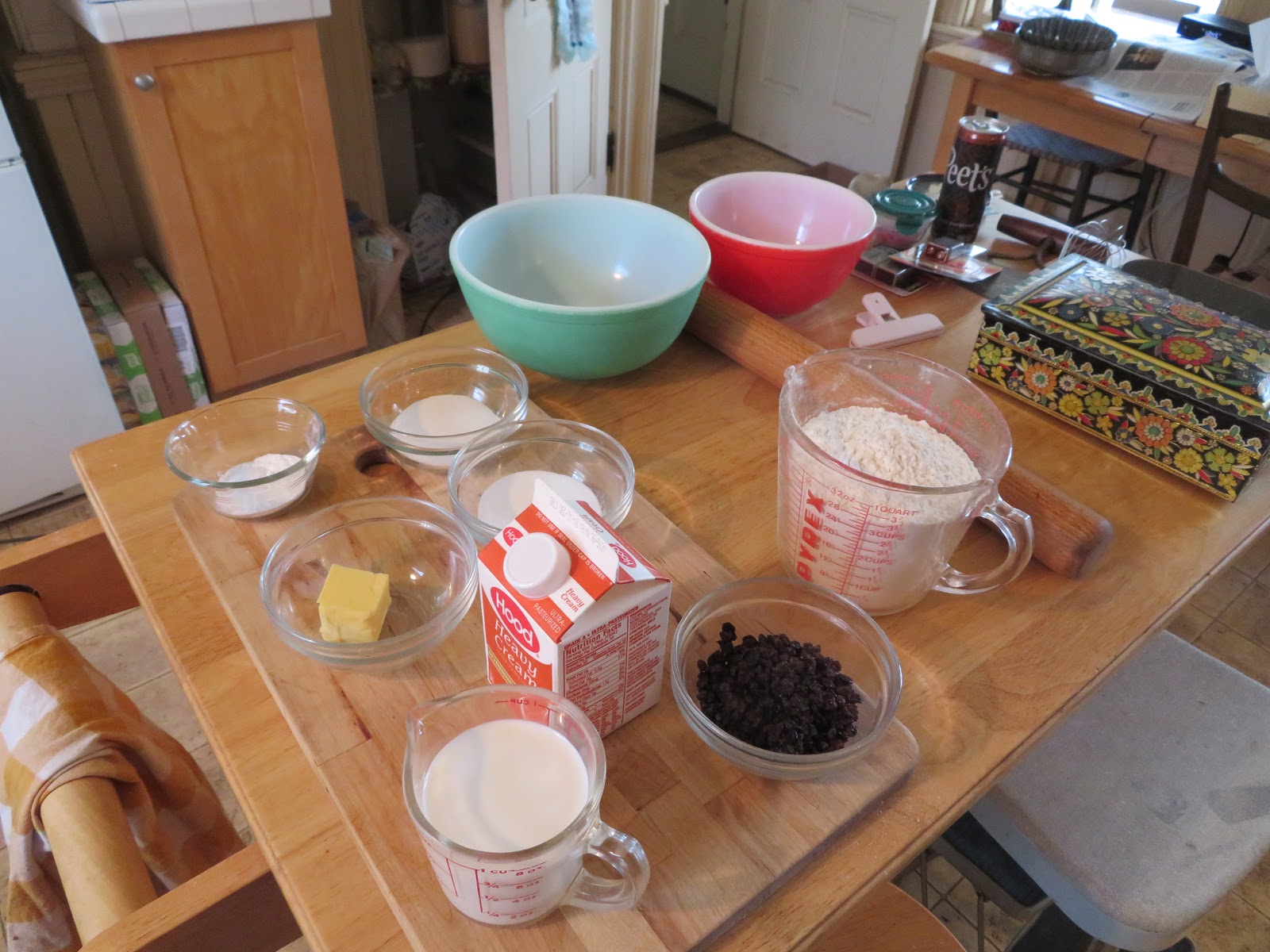
1/2 cup rice flour
1 tsp salt
1/4 cup sugar
2-1/2 tsp baking powder
1/2 cup currants
1/2 cup cream
3/4 cup milk
2 Tblsp melted butter

Instructions:

In a bowl, combine the flours, salt, sugar, baking powder and currants.


Mix the remaining ingredients together.


Add the liquid to the dry ingredients and blend into a soft dough (do not overwork or it will get tough).

Roll out the dough 1/4-inch thick on a lightly floured board.

Cut into 3-inch rounds and prick each evenly.


Place a griddle (which I just happen to have) or sturdy frying pan on the heat and oil lightly. Place the rounds on the griddle and cook until one side is golden brown, then flip them over and cook the other side.


You can serve them toasted or merely buttered and served warm.


Among the variations you can use cold butter and/or lard, lemon zest, plain flour only (no rice flour). You can also roll out a single round piece and cut into quarters, then cook.
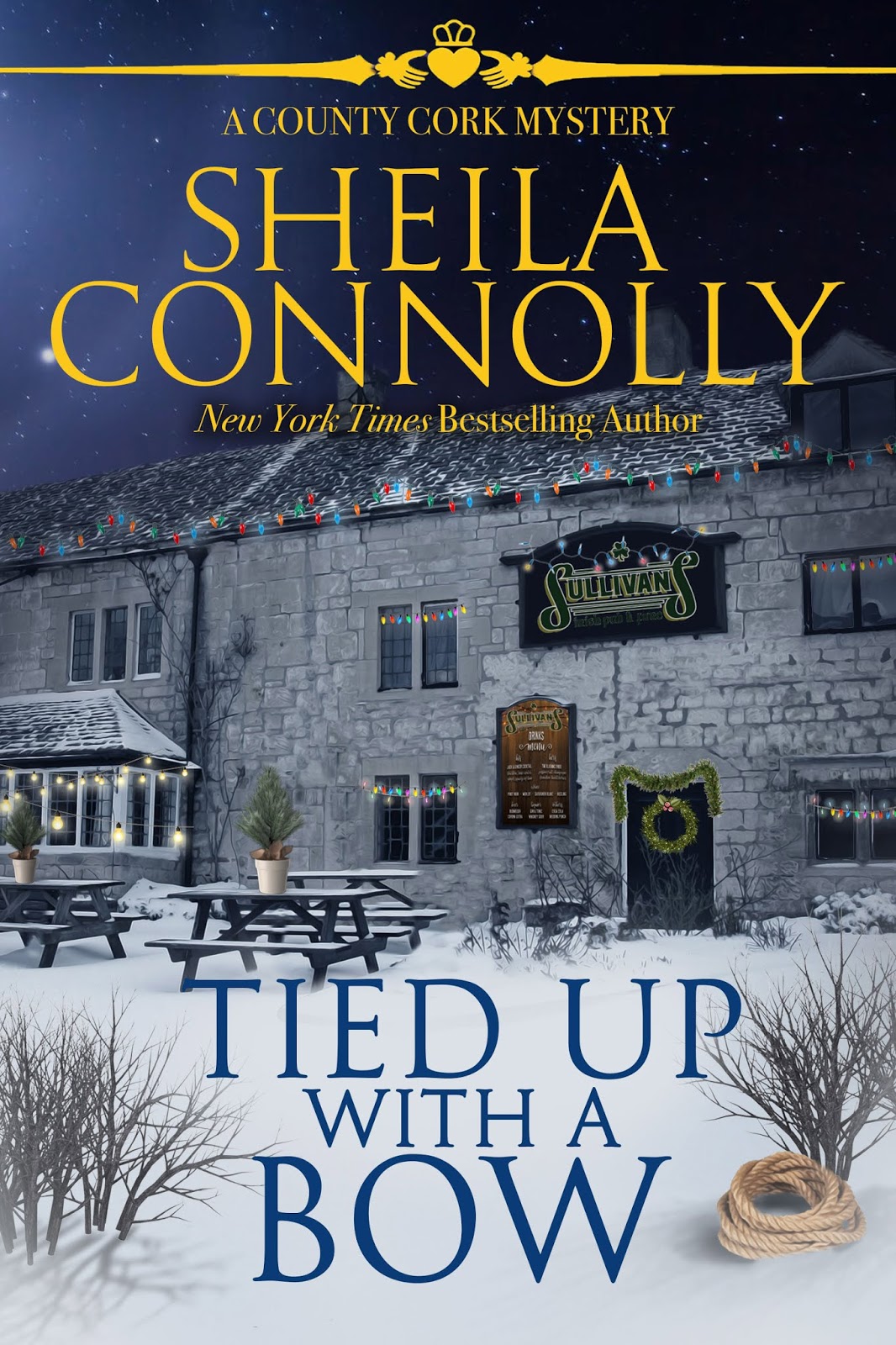

And I can't forget to mention the holiday novella, Tied Up with a Bow, which combines a rather unusual street decoration (based on a real one in Leap, Co. Cork), and an unexpected gift.

Available now!

www.sheilaconnolly.com

Friday, December 7, 2018

Irish Whiskey Cake

The Irish love sweets, which explains why the supermarket’s bakery department is near the front of the store and loaded with yummy cakes and tarts and breads. 


So once again I went hunting for a holiday recipe, and discovered Whiskey Cake. This one comes from an Irish cookbook that I’ve had for years (and quite a few of the recipes include whiskey!).

I’ve been collecting bakeware for a long time—it gives me a reason to prowl antiques fairs and auctions, and the vintage or even antique items are usually very affordable. Baking this new cake gives me an excuse to try out yet another baking tin, which turned out to be a perfect size.


Irish Whiskey Cake

Ingredients (for one 8” cake):


1-1/2 cup raisins
Grated rind and juice of one lemon
2/3 cup Irish whiskey
3/4 cup butter
3/4 cup brown sugar (make sure it’s soft)
1-1/2 cups all-purpose flour
1 tsp baking powder
1/2 tsp ground cloves
pinch of salt
3 eggs, separated

For icing:
1-1/3 cups confectioner’s sugar
the lemon juice from above
a bit of warm water

Instructions:

Soak the raisins and lemon rind in the whiskey for several hours, or overnight.

Cream together the butter ad brown sugar until light and fluffy. Mix together the flour, baking powder, cloves and salt.


Gradually beat the egg yolks (one at a time) into the butter and sugar mixture, alternating with the dry ingredients. Stir in the raisins and whiskey.


Whisk the egg whites until stiff, then fold into the mixture.


reheat the oven to 350 degrees. Grease an 8” cake tin. Spoon the batter into it. 


Bake for about 1-1/2 hours until the cake is well risen and springy to the touch (don't overbake or the cake will dry out). Place the tin on a wire rack and let cool. (If you’ve greased the pan well, the cake will come out easily when cool.)


Icing: Sift the confectioner’s sugar into a bowl. Make a well in the middle. Add half the lemon juice and combine. Add more lemon juice and a bit of water (if needed) until the mixture is thick and smooth.


Place the cake on a plate, then spoon the icing over it, letting it dribble down the sides.


I have to say the cake smells wonderful! The sweet/tart glaze makes a nice contrast to the cake itself, or you could skip that step if you want.


Since I seem to be in an Irish mood, I've just released Tied Up with a Bow, a holiday novella set in Leap.

And next month The Lost Traveller will be out!


www.sheilaconnolly.com


Friday, November 30, 2018

Purple Soup

Winter is a good time for soup. It warms your body, and as it simmers it helps to warm (and humidify) your kitchen.

Soup can include almost anything—vegetables, meat, fish, beans, and whatever leftovers are lurking in your fridge.

But this one sneaked up on me. It started when my market had a batch of purple cauliflower recently. I like cauliflower, and the purple kind is so pretty! (I’ve also tried the golden kind, the green kind, and the pointy kind.) So I bought a head.


The next week the market had purple brussels sprouts. I didn’t even know they existed! Purple cabbage, sure, and red cabbage and crinkly cabbage? But colored brussels sprouts? Of course I bought a bag (these came from the Netherlands!).


And then I started thinking . . . What other vegetables are purple? Some carrots are. So are some potatoes (a gorgeous color). Peppers?

Who knew that purple veggies were taking over the world? 

Now I needed a recipe. but that’s the easiest part. It’s not surprising that there are plenty of Irish recipes that rely on potatoes and cabbage. Some recipes call for bacon or ham as well, but I wanted to highlight the vegetables. I didn’t want a recipe that called for cream or milk, because with all the purple ingredients, the milk would probably turn a muddy grey. So I combined a few recipes, and this was the result!

Purple Vegetable Soup

Ingredients: (Note: the amounts of the different ingredients are flexible!)


1 lb cauliflower florets
1 lb brussels sprouts [Note: one recipe called for roasting both of these, by lining a baking sheet with foil, spraying it with oil, laying the vegetables on it, drizzling with oil, then roasting in the bottom third of a preheated 450 degree oven until slightly browned. I can see that this would add a richer flavor to the soup, but I wanted to see how it would taste without this first.]
one half head of cabbage (purple, of course)
3 Tblsp butter
3 Tblsp olive oil
1/2 cup chopped shallots or one large onion (I used small red onions for color)
3-1/2 cups vegetable broth or chicken broth (or more if you need more liquid)
1 lb. purple potatoes, peeled and quartered
4 purple carrots, peeled and sliced
3/4 tsp salt
black pepper to taste

Heat the olive oil and butter over low heat. Add the onion and carrots and cook until soft, about 10 minutes. 


Add the potatoes and stock to the pot and bring to a boil. Simmer until the potatoes are tender, about 10 minutes. 


Add the brussels sprouts and cauliflower (and cabbage if you’re using it). Season with salt and pepper and simmer until the vegetables are tender.


I should add that an even simpler recipe calls for combining all the vegetables plus the olive oil, stock salt and pepper, and simmering about 20 minutes. Then puree in a blender until smooth.


As you can see, this is a very versatile soup (and it takes more time to chop or slice the ingredients than to cook it). And it’s purple!


Friday, November 23, 2018

Thanksgiving Corn Sticks

I hope most of you have survived making and eating your Thanksgiving feast and now have a mountain of leftovers in the fridge. (I ducked out on the meal entirely.) 


Turkeys in my yard
But it occurred to me that I had a recipe for something that could be whipped up quickly and easily, and you can serve it along with all those leftovers. Corn sticks! Made with freshly ground corn in Plymouth!

I live about fifteen miles from Plymouth, and I’ve visited Plimoth Plantation more than once, though I’ve never attended their annual Thanksgiving feast. You can probably guess what’s on the menu, and the menu for that first 1621 feast is recorded in some original documents. Basically it consisted of wild fowl (including not just turkey but also swan and ducks and even passenger pigeons), venison, some shellfish, corn, and a few root vegetables, but no potatoes or cranberries. 


It was the corn that caught my eye, not because I’m wild about corn, but because of the Plimoth Grist Mill. It was built a bit later than the first Thanksgiving, in 1636, next to the brook that runs through Plymouth, for the purpose of grinding corn. It was run by John Jenney—who was my tenth great grandfather. The original mill burned down in 1837, but was recreated on the same site in 1970, and still operates—and grinds corn. 

I just happened to have some of that ground corn in my fridge, and this seemed like the ideal time to use it.


There is a recipe on the bag, but it boils down to (yes, a bad pun) boiled ground corn. So I went hunting for something slightly more interesting. I happen to have a copy of the Williamsburg Art of Cookery, which is a couple of generations later than anything from Plymouth, but it includes an easy recipe for corn sticks, and how much could they change? I am have plenty of corn stick pans, including my mother’s.

Williamsburg Cork Sticks

Ingredients: 
(once again, I made a half-recipe, which yielded seven corn sticks)

3 cups corn meal
3 cups milk
2 eggs
2 Tblsp melted lard (I used butter)
1-1/2 tsp salt
3 tsp baking powder


Stone milled corn--you can see it's coarse
Instructions 
(not included in the printed recipe):

Mix everything together. Be sure to mix well so all the ingredients are evenly distributed.


Preheat the oven to hot (let’s guess 450 degrees?). Grease the corn stick pan(s) and set in the oven to heat.


My mother's pan
Pour the mixture into the slots in the hot pans and bake for about 20 minutes (or less, depending on the size of your pans). The corn sticks should be golden (if you take them out too early, they fall apart when you try to take them out of the pan).


All things willing, my holiday novella, Tied up with a Bow, will be released at the end of this month by Beyond the Page. No, it's not set in Plymouth--it's in Ireland, where Christmas decorations are just going up in the village of Leap. And Maura Donovan is holding a raffle of sorts where people can guess just what those decorations are!

Stay tuned for order details!